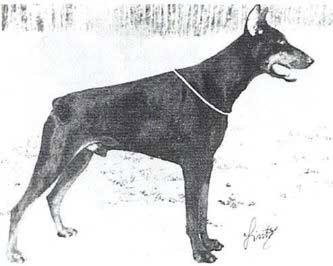
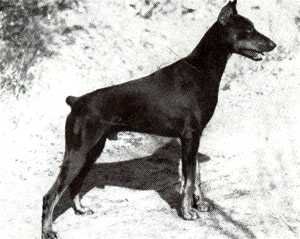
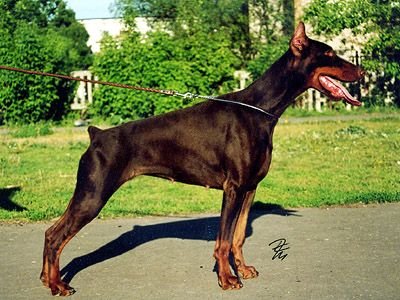
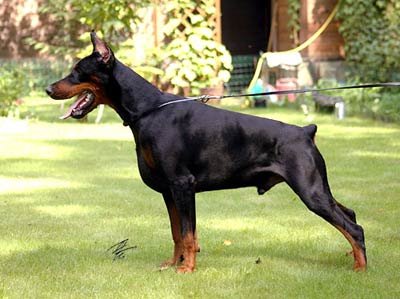
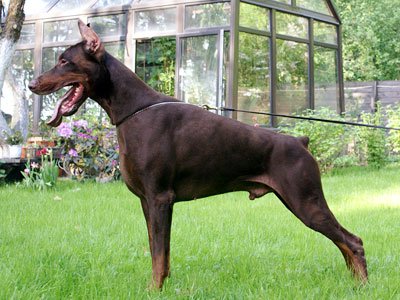
To breed only one breed – dobermann ! by Massimo Santini


TO BREED ONLY ONE BREED – DOBERMANN !


Author: Massimo Santini "Diamante Nero" kennel, Italy (italian version)

diamantenero2.bmp

It may seem that above sentence sounds unreal and even as a heresy, doesn’t it?
Let’s try to think about it and see where it is going to lead us because I’m sure that at the end of it is Kennel Club.
Currently, "policy of Kennel Club" seems to be very popular subject even inside of the club – different parties, groups and opinions, attempts to combine different sights and interests and also attempts to change the "way" (of breeding).

Goal? Simple – Improvement of dobermann breed.

It’s sad but I’ve to admit that even in our community more and more popular is becoming a thesis of "two different attitudes toward dobermann breed" which are totally different and independent from each other. That’s also an example which confirms that we have to face evolution in way of breeding which, as we know, should be independent from opinions of leaders and pressure-groups – lobbies.
We can easily say about division arround the breed. I don’t remember very well but few years ago I read in some magazine the story about Malinois breeder, I think that name was "des Colombais". Since 1950 he got important results in breeding and in working trials. I’m not going to focus on it, I only consider it as a "starting point" which will allow me to shout loudly: WE HAVE MORAL OBLIGATION TO BREED ONLY ONE BREED !
It’s worth to reflect on blood-lines in last 30 years. I need to say that in our breed, especially in relation to working dogs, from genetical point of view there are no big differences which could determine breeding choices while it exists in other breeds. In my opinion, if we will be more attentive, we could see or even take part in Working competition where some good-looking dobermann will prove his remarkable qualities and become a "starting point" for whole breeding.
Yes, I’m exaggerating and I’m aware of it but on the other hand I’m sure that is possible to achieve this goal but to do it, would be necessary to change the policy of the club. Haviing in mind policy of the club I don’t mean AIAD, on the contrary, I need to stress that AIAD made the title AIAD Champion which is available for a dog who is taking part in IPO III competition and getting in C part 90 points. Refering to some decissions in other clubs, which are "historical mistakes" and lead into divisions within the breed.


Sig.jpg

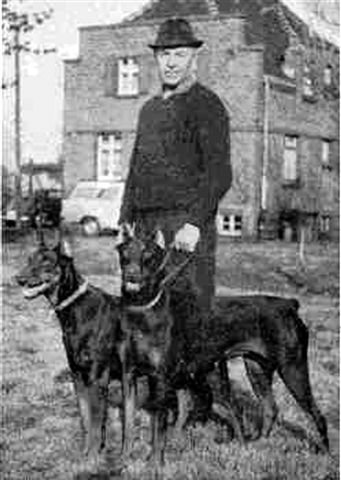
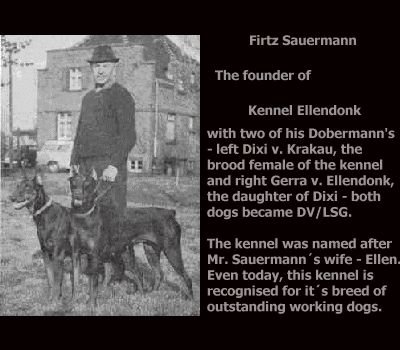
Sig. Sauermann – "v. Ellendonk"


Excepting policy of Kennel Club, putting attention on selection and breeding evolution I would like to try to understand and to analyze some blood-lines which for sure played special role in important changes in the breed.


Bonni.jpg

Bonni v. Nettetal


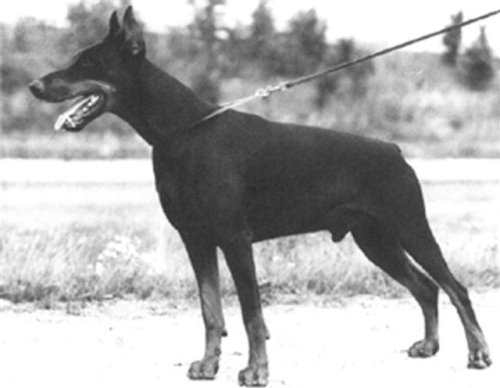
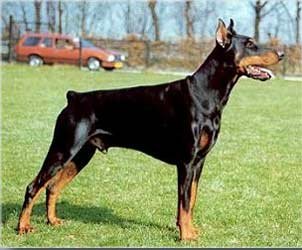
Obviously, the blood-line who historicaly is the base of relation between dog built and evolution of character was line von Ellendonk (recognizable since 1960′) owned by Mr Sauermann. Final result of this kennel was black male Bingo von Ellendonk (Jago von Beelen x Palma v. Ellendonk), Winner of DV Working Championships in 1977. Bingo having only 2 years passed Korung and was also the first dobermann in the world who got result 100-100-100 in DV SchH III competition. Mr Vogel described him as one of the best workng dogs in the history of dobermann breed. From morfological point of view as a beautifull male, medium sized with excellent body, very important for breeding first of all because of his character. It’s also important to mention that Bingo’s mother was DV Siegerin. Really, many of his progeny followed fathers steps. Undoubtedly, the most famous is his daughter Cora von Papenkamp (Bingo v. Ellendonk – Afra von Papenkamp), who in 1981-1982-1984 won DV Championships getting 99 points in C part. I should also pay attention on 2 sons of Bingo – black male Bonni von Netteta (Bingo v. Ellendonk – Anouk v. Netteta) – Winner of Championships in 1986-1987 what confirmed father’s "genotype". Second male is Nicolai v. Klosterkamp (Bingo v. Ellendonk – Bosha v. Klosterkamp), in 1987 in same Championships got 2nd place, just after his brother and next got Korung 1A. Mating of Nicolai and Bonita van Rensloo in 1982 was very essential especially because of the balance between morfological and character traits. From that combination was born female Int Ch, Welt Sgn, DV Sgn Esmir v. Hermansjomaik – foundation female of dutch kennel van’t Wantij.


SAUERMANN.jpg


Today, in spite of so many years, best working dogs are related with Bingo v. Ellendonk in many cases. It happens quite often that to rate correctly morfological traits and abilities of each dog, there’s a lack of the most important parameteres which are refering to morfological traits. Sometimes it seems that inbreeding for sure would bring in breed evoluton regressive results.


However, we can’t never forget that Bingo was a son of Int. Ch, BD Sg, Euro Sg, Korung Jago von Beeden (Chico v. Forell – Dasha v. Forell), who as we all know was one of best producer at his time.


Jago.jpg

Jago v. Beelen


It’s enough just to mention that Jago is also a father of black male WELT Sg, IDC Sg, BD Sg, DV Sg, Euro Ch. Korung – Bronzo v. Zenn (Jago von Beelen x Elke v. Pfalzer Waldheim), male who created v. Norden Stamm blood-line where so many dogs were born who sucessfully passed Korung and their morfoloy was on excellent level.


bronco.jpg

Bronco v. Zenn


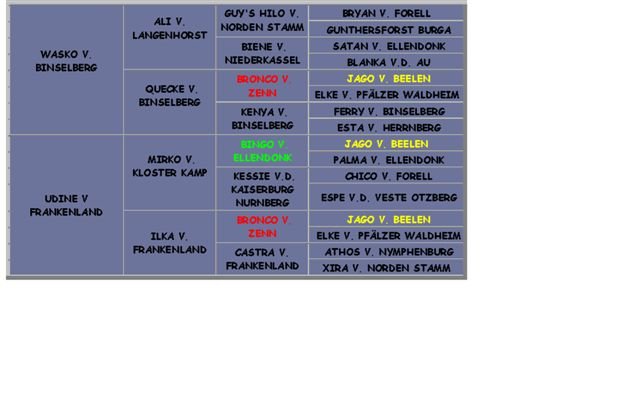
At the begining of 1990’s, from mating of Wasko v. Binselberg and Undine v. Frankenland (very important pedigree, affinity to line of Jago v. Beelen) was born in dutch kennel a black male – WELT Sg, IDC Sg, BD Sg, DV Sg, Euro Ch, Korung – Hertog Conan v. Manensehide. Male of beautifull body, excellent proportions… no matter that head was not perfect


Currently, the most titled winner in the history of dobermanns and he was widely used as a producer almost all over the world giving to his progeny best traits. However from morfological point his progeny never got international pubicity.
In spite of all, I’m sure that best genetical traits acquired in different blood-lines, earlier or later will contribute into dream affinity. I think that if we breed one breed, we have to do everything to breed only this one breed.

hertog_conan.jpg

Hertog Conan v. Manensheide


Pedigree.jpg

Allevare una sola, razza dobermann ! – by Massimo Santini


ALLEVARE UNA SOLA… RAZZA DOBERMANN !


Author: Massimo Santini "Diamante Nero" kennel, Italy (english version)

diamantenero2.bmp


Detta così, potrebbe sembrare anche una fantastica e scontata eresia…..non vi pare?
Proviamo a ragionarci sù… e guardiamo dove arriviamo o possiamo arrivare, poichĂŠ sono convinto essere questa l’unica strada da percorrere in Cinofilia, o che per lo meno andrebbe percorsa, ma…. haimè, la realtà delle cose come sappiamo è ben diversa.
Ormai la “politicoCinofilia” è l’argomento che spesso predomina sulla cinofilia stessa…creando veri e propi partiti… opinion-leader… tesi…interessi economici di vario genere…cercando di deviare il percorso dalla vera strada maestra che si dovrebbe percorrere…cioè quella di allevare …per migliorare la razza Dobermann.
E’ triste doverlo ammettere, ma ormai anche nel nostro ambiente, sempre più si stà diffondendo una sorta di “due culture della razza” …ben distinte e seperate e di uno…scontato e per qualcuno…legittimo convicimento nel dover prendere atto che ormai la politica dell’allevamento, cioè in pratica…dell’evoluzione zootecnica della razza, debba essere gestita in modo “indipendente” dai vari opinion leader facenti capo ai partiti del cosidetto mondo del “lavoro” e dei cosidetti “bellezzari”….ma chi l’ha detto…. e soprattutto in quale testo “sacro” stà scritto ????
Signori…questa è una logica che può portare solo ad una divisione di una razza.
Non mi ricordo bene…ma qualche anno fà ho letto su una rivista specializzata, la storia di un importante allevatore di Malinos…mi sembra di ricordare che il nome fosse “des Colombais”, e si trattava di un Allevatore belga, che ha ottenuto importanti risultati sia nel lavoro che nel’allevamento fino dal 1950, ma non è di questo che dobbiamo occuparci, è solo lo spunto dal quale vorrei partire per poter gridare a squarciagola….che abbiamo l’obbligo morale di provare ad allevare una …SOLA RAZZA….potrete voi stessi rendervi conto attraverso un attenta e analitica visione delle linee di sangue di quest’ultimo trentennio, che questo obbiettivo è certamente possibile, voglio dire che nei Dobermann cosiddetti da lavoro non ci sono geneticamente parlando distanze tali da giustificare un ulteriore selezione della razza , come purtroppo è avvenuto di fatto in altre razze, quindi io credo che se sotto questo aspetto ci sarà più attenzione, forse riusciremo nell’intento … di andare a vedere … o meglio ancora … di partecipare, ad un Campionato di Addestramento dove un … bel Dobermann che dimostrerà la sua attitudine, sarà un importante punto di riferimento … per l’Allevamento.


Lo sò che la stò dicendo grossa…me ne rendo perfettamente conto, ma sono certo che si può raggiungere questo obbiettivo, anche se credo, che per fare ciò, ci sia bisogno …purtroppo…anche della politica del Club di razza, dico purtroppo non perchĂŠ mi riferisca all AIAD, anzi tuttaltro…(voglio infatti evidenziare il fatto che proprio l’AIAD ha istitutito un trofeo da assegnare al cane che avendo ottenuto il titolo di AIAD.CH. al Campionato di Allevamento partecipi anche al Campionato di Addestramento in IPO III dove qualificandosi e ottenendo nella sezione C il punteggio di 90 conquisterebbe il trofeo, che personalmente voglio ritenere essere, qualora un cane raggiungesse questo traguardo, certamente il più importante dei trofei)…ma perchĂŠ mi riferisco ad alcune gestioni “storicamente sbagliate”, fatte in altri Club…che hanno portato allo scempio della divisione della loro razza…ma occupiamoci solo di casa nostra.


Sig.jpg

Sig. Sauermann – "v. Ellendonk"


Tralasciando, l’aspetto …cinopolitico della questione, e traversando invece alcune logiche della selezione e dell’evoluzione allevatoriale della razza, vorrei cercare di capire ed analizzare alcune linee di sangue che certamente hanno apportato importanti contributi genetici attitudinali nella razza Dobermann.


Bonni.jpg

Bonni v. Nettetal


Certamente una linea di sangue che storicamante stà alla base di una solida “tradunion” tra morfologia e carattere nell’evoluzione della razza, è stata la linea von Ellendonk, allevamento noto fin dagl’anni 60 del sig. Sauermann, e nella quale possiamo identificare come risultato finale il maschio nero Bingo von Ellendonk (Jago von Beelen x Palma von Ellendonk), vincitore nel 1977, a soli due anni di età, del Campionato di Lavoro della D.V., Bingo ottenne poi la Korung a vita e fu anche il primo Dobermann al mondo ad ottenere in una gara di lavoro della D.V. in SchH III il risultato di 100-100-100. Definito dal sig. Vogel come in assoluto uno dei migliori cani da lavoro nella storia del Dobermann, lo descriveva sotto l’aspetto morfologico un bel cane in media taglia da Molto Buono, ma comunque maschio che con i dovuti accorgimenti, sarebbe stato utile in Allevamento, soprattutto per le sue grandi qualità genetiche riferite al suo carattere, (da ricordare che la madre di Bingo fu a sua volta Campionessa di Lavoro D.V.) infatti molti dei suoi figli ricalcarono le linee paterne nelle più importanti gare di lavoro in quel periodo, dove forse la più conosciuta è senza dubbio la femmina Cora von Papenkamp (Bingo von Ellendonk x Afra von Papenkamp) che nel 1981-1982-1984 vinse il Campionato di lavoro D.V., riportando nella sezione C sempre come ponteggio 99. Menzionerei ancora due importanti figli di Bingo, che furono il maschio nero Bonni von Nettetal (Bingo von Ellendonk x Anouk von Nettetal), vincitore del Campionato di Lavoro nel 1986-1987, riconfermando la “genotipicità caratteriale” del padre, e Nicolai von Klosterkamp (Bingo von Ellendonk x Boscha von Klosterkamp) il quale al di là del fatto di arrivare 2° nel 1987 dietro a Bonni nel Campionato di Lavoro D.V. ottenendo poi, anche la Korung a vita 1A, perchĂŠ fu secondo il mio punto di vista di un “tramite” molto rilevante per mantenere, nell’accoppiamento che fu fatto nel 1982 fra Nicolai con Bonita van Rensloo, un importante equilibrio fra morfologie e carattere, ricordando che da questo accoppiamento nacque la femmina nera INT.CH.WELTSgn.DVSgn. Esmir van Hermansjomaik, divenendo a sua volta la capostipite dell’Allevamento Olandese van’t Wantij .


SAUERMANN.jpg


Ancora oggi a distanza di tanti anni, molti dei migliori cani da lavoro della razza sono ancorati geneticamente a Bingo….in qualche caso…. forse un po’ troppo, dico questo perchĂŠ nel dare una valutazione per un corretto giudizio morfologico-attitudinale di molti di questi soggetti, vengono poi a mancare i parametri essenziali…riferiti al lato morfologico….che esasperati talvolta da strette consanguinetà darebbero nell’evoluzione della razza certamente risultati regressivi.


Detto questo però, non dobbiamo dimenticarci mai…che Bingo è figlio di un certo INT.CH.BDSg.DVSg.EUROSg.Korung Jago von Beelen (Chico v. Forell x Dascha von Forell) che, come tutti sappiamo è stato certamente fra i migliori riproduttori del suo tempo, basta per esempio ricordare che Jago è anche il padre del maschio nero


Jago.jpg

Jago v. Beelen


WELTSg.IDCSg.BDSg.DVSg.EUROCH. Korung a vita Bronco von Zenn (Jago von Beelen x Elke vom Pfàlzer Waldheim) soggetto che ritroveremo anche nel tracciato genetico della linea v. Norden Stamm, dove molti soggetti nati in questo allevamento hanno poi superato la Korung, soggetti che voglio ricordare, erano anche supportati da un eccellente morfologia.
All’inizio degli anni 90 , dall’accoppiamento di Wasko v. Binselberg x Udine v. Frankeland… (pedegree impostato, in primis sul richiamo di sangue di Jago v. Beelen… e passandomi l’espressione… in ottima compagnia con soggetti come… Bronco v. Zenn…Bingo v Ellendonk…


bronco.jpg

Bronco v. Zenn


… soggetti dei quali abbiamo già parlato, a proposito della loro attitudine …) nasceva, in un allevamento Olandese il maschio nero WELTSg.IDCSg.BDSg.DVSg.EUROCH. Korung Hertog Conan v. Manensheide, maschio di ottima sostanza e di buone proporzioni… anche se la testa peccava… nel parallelismo.


A tutt’oggi questo soggetto è in assoluto il Campione più premiato della storia del Dobermann ed è stato usato veramente con molte fattrici, un po’ in tutto il mondo, apportando certamente soprattutto sotto l’aspetto attitudinale migliorativi genetici… mofologicamente però… in prima battuta, come si suol dire.. non ha avuto figli che abbiano avuto risultati di risonanza Internazionale,…fatta qualche eccezione… ma sono comunque convinto che i migliorativi genetici attitudinali acquisiti da diverse linee di sangue, prima o poi torneranno utili, per contribuire al conseguimento sperato… penso da tutti quando si alleva una razza, cioĂŠ quello di cercare di allevare sempre una …sola razza.

hertog_conan.jpg

Hertog Conan v. Manensheide


Pedigree.jpg


von Furstenfeld & von Forell – by Massimo Santini – polish

FURSTENFELD I FORE LL …. Dwie różne szkoły hodowli Dobermanna ?


Author: Massimo Santini "Diamante Nero" kennel, Italy (click here to view version of article in italian language)
 

diamantenero2.bmp


Bez wątpienia tak…


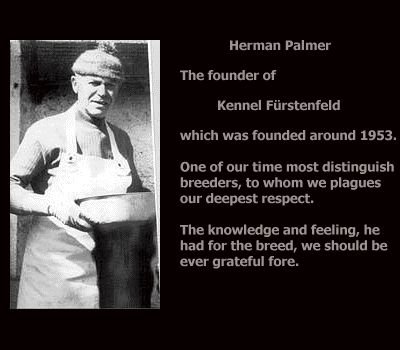
Pan Herman Palmer właściciel hodowli v Furstenfeld i Pan Ernest Wilking, właściciel hodowli v Forell wprowadzili nowatorskie koncepcje dotyczące rasy Doberman, choć "genotypowo" rzecz biorąc, obie hodowle pochodziły z tej samej „puli genów".
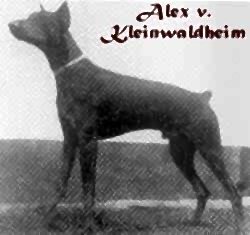
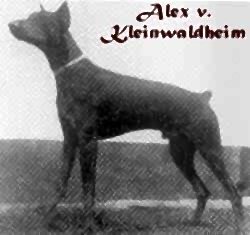
Jeśli skoncentrujemy się na linii czarnego samca BDSg Alexa v. Kleinwaldheim (Ajax v Simbach x Carola v Sudharz) urodzonego w 1946 roku, możemy określić go jako "punkt wspólny" dla pozostałych psów. Stał się on źródłem przeróżnych analiz prowadzonych przez hodowców i miłośników rasy.


Kleinwaldheim.jpg


breeders_05.jpg


Wilking2.jpg

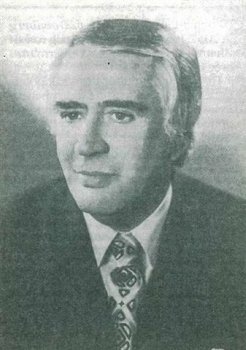
Mr. Ernest Wilking


Chciałbym również podkreślić pierwszorzędne znaczenie nie tylko zespołu genów tego psa, ale także zwrócić uwagę na szczególne cechy charakteru tego psa. Nie można zapomnieć, iż w latach 40 był jednym z pierwszych, który zdołał zdac ówczesne testy i konkursy. Pozwolę sobie ustalić i zweryfikować chronologicznie rozwój rasy.

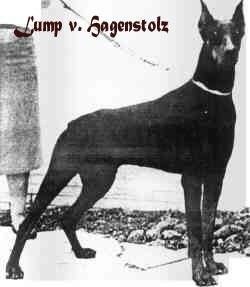
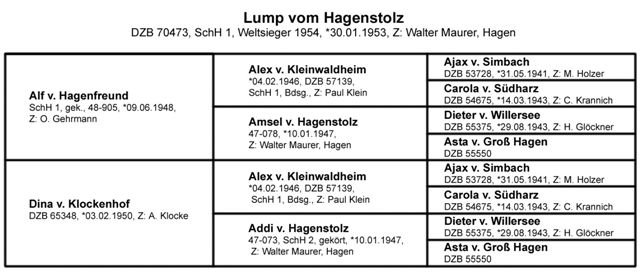
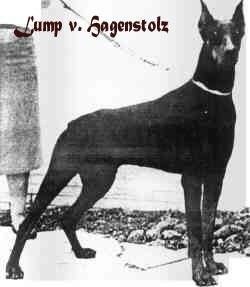
W 1953 roku, w wyniku ścisłego pokrewieństwa z Alexem v. Kleinwaldheim rodzi się w hodowli v. Hagenstolz należącej do Pana Maurera czarny samiec WELTSg.SchH I Lump von Hagenstolz. Jego ojcem był Alf von Hagenfreund (Alex v. Kleinwaldheim x Amsel v Hagenstolz), a matką Dina von Klockenhof, która była także córką Alexa v. Kleinwaldheim i Addi v. Hagenstolz, a ta z kolei siostrą Amsel v. Enstol.


LumpHagenstolz.jpg

lump.jpg

Jest oczywistym, iż podstawą “gwarancji genetycznej" Lumpa von Hagenstolz był wysoki wskaźnik pokrewieństwa (praktycznie rzecz biorąc krycie zachodziło pomiędzy siostrą i bratem). Przed tym jak poznamy najważniejszych potomków Lumpa von Hagenstolz pochodzących z hodowli pana Palmera, chciałbym dodać, iż wielokrotnie bywałem w domu właściciela i za każdym razem rozmawiając z nim osobiście opowiadał mi o niezwykłych cechach Lumpa, psa który już jako szczeniak uczęszczał na wystawy i z biegiem czasu stał się bardzo popularny. W roku 1956 doszło do krycia pomiędzy nim a czarną suczką Inka v.d. Nordburg (Nord Germania x Edda v.d. Nordburg ). Dzięki temu urodził się czarny samiec Bordo von Furstenfeld.

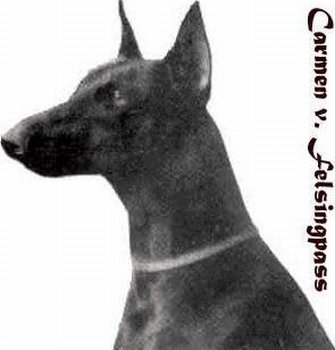
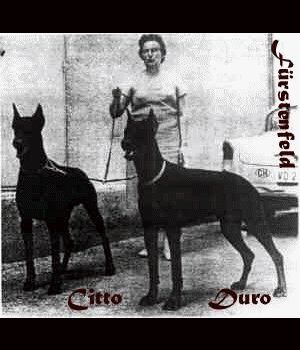
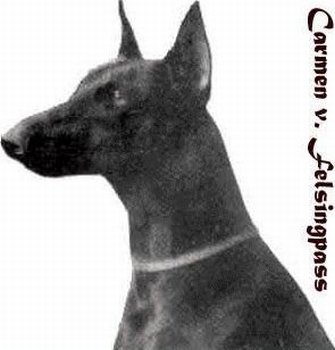
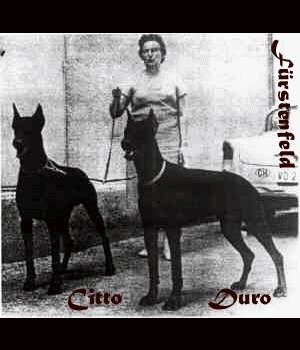
Wracając do chronologicznego układu wydarzeń, w 1958 pan Palmer pokrył czarną suczkę INT.CH.BDSgn.SchH I Carmen v. Felsingpass (Igon v. Naunhof x Hede v Felsingpass) z Lumpem von Hagenstolz. Owocem tego krycia były dwa bardzo znaczące (genetycznie) psy dla dalszego rozwoju hodowli. Mam tu na myśli czarnego samca BDSg.IDCSg. Citto von Furstenfeld i o czarną sukę INT.CH.BDSgn. Citta von Furstenfeld.


Carmen.jpg Duro_Citto.jpg


Na temat Bordo von Furstenfeld pan Vogel potwierdził, że pies ten został obdarzony niezwykłym charakterem oraz wojowniczością przekraczającą średnią, tymi cechami obdarzył swoje potomstwo.

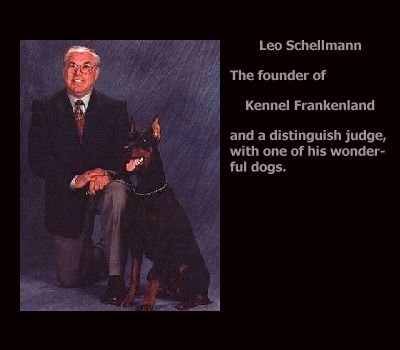
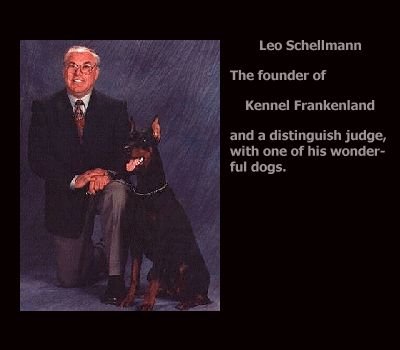
Jestem przekonany, że krycie Bordo von Furstenfeld x Citta von Furstenfeld, które Palmer powtórzył 5 razy (mioty K L M U V) można określić jako kluczowe w tamtych czasach dla rozwoju rasy Dobermann. Było to bardzo innowacyjne, ponieważ oba osobniki były bezpośrednio spokrewnione z Lumpem von Hagenstolz. Kilka szczeniaków z tego krycia zostało sprzedanych za granicę, tym sposobem zaginał o nich ślad, kilka nie zostało docenionych. W każdym razie odwołamy się do znaczących osobników pochodzących z wyżej wymienionych miotów, spośród których wspomniałbym o czarnym samcu urodzonym w 1962 SCH.I. Kandy von Furstenfeld, który to został powierzony panu Leo Schellmannowi, właścicielowi hodowli v. Frankenland.


SHELLMANN.jpg

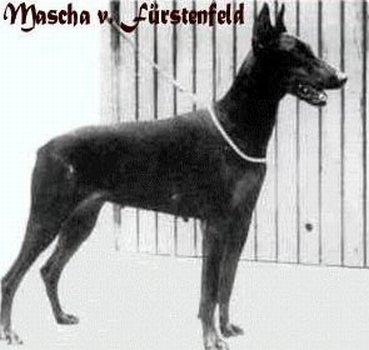
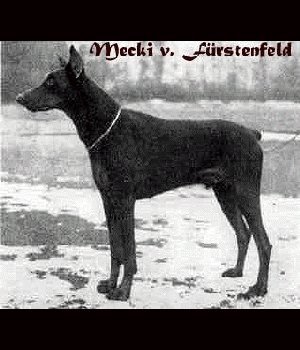
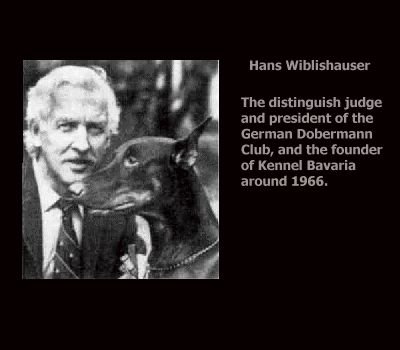
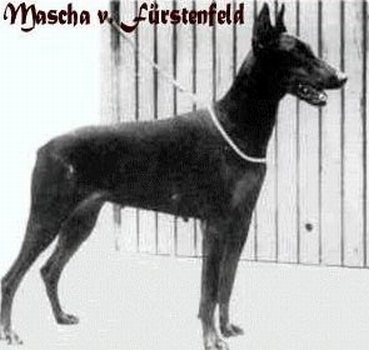
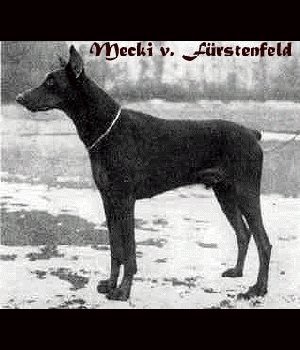
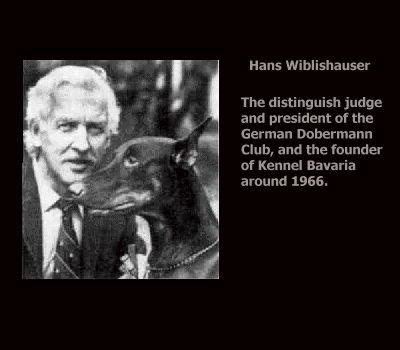
Z miotu na literę M należy wymienić brązowego samca urodzonego w 1963 INT.CH.BDSg.SchH III Mecki von Furstenfeld, czarnego samca INT.CH. Miko von Furstenfeld i czarną sukę INT.CH.BDSgn.SchH III Mascha von Furstenfeld, która została powierzona Hansowi Wiblishauserowi, właścicielowi hodowli v. Bavaria i aktualnemu prezesowi Dobermann Verein i IDC.


Mascha.jpg Mecki.jpg


wiblishauser.jpg

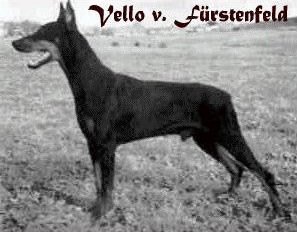
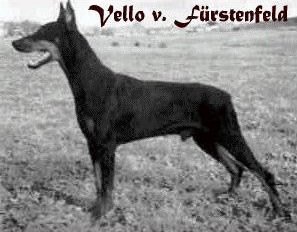
W ostatnim miocie na literę V z 1966 uważanym przeze mnie za bardzo ważny, pojawiła się czarna suczka BDSgn.SchH I Vijlia von Furstenfeld i samiec DV.CH. di lavoro, SchH III Verry von Furstenfeld, jednakże nie pozostawiają oni po sobie genetycznie rzecz biorąc ważnych śladów w rasie. Pisząc o ważnym potomstwie, mam na myśli czarnego samca SchH III Korung Vello von Furstenfeld powierzonego Ottmarowi Vogelowi, właścicielowi hodowli v Wilden Markgraf, który był także odpowiedzialny za szkolenie przez prawie 10 lat w Dobermana Verein.


vello_v_furstenfeld_egdupddi.jpg

Według mnie dzięki tak innowacyjnemu doborowi par hodowlanych i pomysłowości właściciela odnośnie modelu kryć Vello reprezentuje nowy typ współczesnych dobermanów. Tak jak już wcześniej wykazałem, niektóre krycia dotyczyły ścisłego pokrewieństwa dokładnie zaplanowanego przez Pana Palmera. Zgadzam się przy tym z Panem Voglem, który twierdził, że taki sposób selekcji, początkowo krytykowany, w konsekwencji stał się bardzo ważnym czynnikiem, który ostatecznie doprowadził w następnych latach linię v. Furstenfeld do stworzenia niezwykłej rasy. W procesie jej tworzenia zasadniczą rolę odegrała długotrwała selekcja oraz "dryf genetyczny". Dzięki temu narodziła się legenda „typu Furstenfeld”, który opierała się między innymi na następujących cechach morfologicznych: charakterystyczna głowa z bardzo ciemnymi oczami, podpalana kufa, unikalna szyja. Są to aspekty, które wyznaczają także różne interpretacje odnośnie hodowli pana Wilkinga i Palmera. Koncepcje tych dwóch hodowców wpłynęły bezpośrednio na innych.

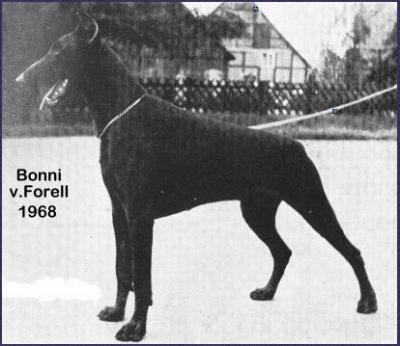
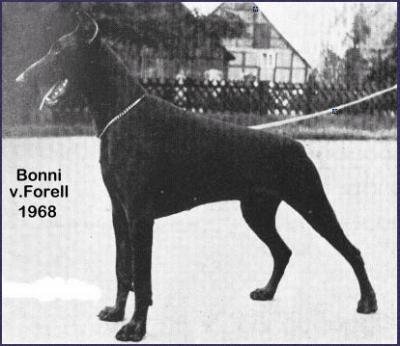
Krycie Vello v Furstenfeld x Kira v. Romberg (Bingo v. Dornberg x Ilka v. Romberg ) z 1968, które zostało zaplanowane przez Pana Wilkinga, należy stwierdzić, iż w ten sposób stworzono najważniejszą linię genetyczną w ostatnim 30 – leciu. Maą±c na uwadzę czarnego samca INT.CH. Bryan von Forell, brązowego INT.CH.BDSg.DVSg. Bonni von Forell i po przeanalizowaniu ich rodowodów można powiedzieć, iż owe osobniki doprowadziły do swoistej ewolucji w rasie dobermann.


bryan_v_forell_luqhjrsf.jpg

Bryan v. Forell


bonni_v_forell_eaorzzmt.jpg

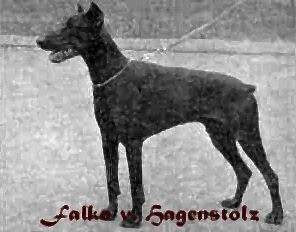
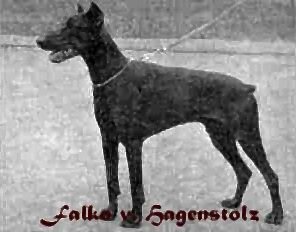
W tym miejscu chciałbym skupić się na Vello von Furstenfeld i tym samym zaakcentować pomysłowość Pana Wilkinga dotyczącą jego hodowli. Wykorzystał on w kryciu pokrewieństwo bazując na Aleksie v. Kleinwaldheim. Zdołał stworzyć osobniki, które były bardzo znaczące dla rozwoju rasy. W 1964 Pan Wilking kryje czarną suczkę Iris von Forell z czarnym samcem urodzonym w 1958 BDSg.SchH I Falko von Hagenstolz (Lump v Hagenstolz x Kitty v Hagenstolz). Z tego krycia rodzi się czarny samiec INT.CH.SchH II Odin von Forell, samiec mocnej budowy, o niezwykłej sylwetce – te walory możemy zdefiniować jako typowe dla Forella, należy przy tym dodać, że umacniały się one wraz z upływem czasu.


FalkoHagenstolz.jpg

W 1968 także pan Wilking skonkretyzował swoją pracę i swoje poglądy dotyczące hodowli, kryjąc Odin von Forell z brązową suczkę BDSgn. Cita Germania (Casar v. Weideneck x Reni Germania). W wyniku tego kryciu narodził się czarny samiec INT.CH.BDSg.DVSg. Chico von Forell. Pan Vogel potwierdził, iż ów pies odziedziczył walory po ojcu – niezwykłą sylwetkę i mocny kościec. Pan Vogel osobiście zajmował się szkoleniem tego psa.


odin_v_forell_dqflmmap.jpg

Odin v. Forell


chico_v_forell_hdbdevlv.jpg

Chico v. Forell


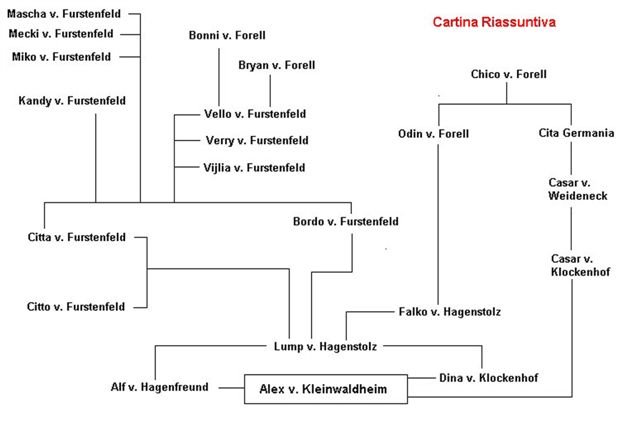
Podsumowując, myślę, iż Vello von Furstenfeld (1966) i Chico von Forell (1968), reprezentują krańcowy cel pracy wspomnianych dwóch hodowców…. Tym sposobem można rzec, że mamy do czynienia ze swoistym „wyrównaniem genetycznym", które wpłynęło znamiennie na rasę. W pewnym sensie jest to „ugoda genetyczna” dotycząca rozwoju rasy dobermann.


summary.jpg

von Furstenfeld & von Forell – by Massimo Santini – italian


FURSTENFELD E FORELL… DUE CORRENTI DI PENSIERO… NELLA RAZZA DOBERMANN ?


Author: Massimo Santini "Diamante Nero" kennel, Italy (visualizzare l’articolo in lingua inglese)

diamantenero2.bmp


Certamente si…..

il sig. Herman Palmer titolare dell’Allevamento v Furstenfeld e il sig.Ernest Wilking titolare dell’Allevamento v Forell, avevano e tracciarono idee diverse nella razza Dobermann, anche se geneticamente parlando, nascono da uno stesso “ceppo genetico,” facendo riferimento alla linea di sangue del maschio nero BDSg. Alex v. Kleinwaldheim ( Ajax v Simbach x Carola v
Sudharz ) nato nel 1946 e che possiamo configurare come un comune punto di partenza genetica, della loro più importante ricerca cinofila.


Kleinwaldheim.jpg


breeders_05.jpg


Wilking2.jpg

Mr. Ernest Wilking


Vorrei anche rimarcare l’importanza primaria, che in questo contesto assume oltre che l’indubbio spessore genotipico di questo soggetto, anche e soprattutto
riguardo alla sua ottima attitudine , ricordandoci infatti di essere stato negli anni 40, uno dei primi soggetti a superare la Selezione di quel tempo.
Andiamo ora a constatare e verificare cronologicamente ..il perchĂŠ di queste mie affermazioni.

Nel 1953, da una strettissima consanguinetà su Alex v. Kleinwaldheim nasceva presso l’allevamento v Hagenstolz del sig Maurer il maschio nero WELTSg.SchH I Lump von Hagenstolz, dettagliatamente, in linea paterna da Alf von Hagenfreund (Alex v. Kleinwaldheim x Amsel v Hagenstolz) e in linea materna da Dina von Klockenhof anch’essa figlia di Alex v. Kleinwaldheim x Addi v. Hagenstolz, che era sorella di Amsel v Hagenstolz.


LumpHagenstolz.jpg

lump.jpg

E’ evidente come risalti da questo accoppiamento, l’alto tasso di consanguinetà…. praticamente un fratello- sorella….consanguinetà sulla quale è stato concepito, Lump von Hagenstolz, che possiamo a ragione ritenere essere stata….una base di “solida garanzia genetica”. Prima di conoscere la più importante progenia fatta da. Lump von Hagenstolz, nell’Allevamento di Palmer, vorrei premettere che parlando personalmente con lui di questo cane…diverse sono state le occasioni nelle quali ho potuto frequentare la sua casa…mi ha sempre confermato le grandi qualità di Lump, soggetto che seguiva fin dalle prime sue apparizioni giovanili nell’esposizioni dell’epoca, e che lo colpirono, in modo direi assoluto tanto da indurlo nel 1956, ad accoppiarci la femmina nera Inka v.d. Nordburg (Nord Germania x Edda v.d. Nordburg ) accoppiamento che darà vita al maschio nero Bordo von Furstenfeld..

Tornando subito al cronologico, nel 1958, il sig. Palmer accoppierà la femmina nera INT.CH.BDSgn.SchH I Carmen v. Felsingpass (Igon v. Naunhof x Hede v Felsingpass) con Lump von Hagenstolz, accoppiamento che darà vita a due soggetti molto importanti geneticamente parlando per l’evoluzione di quest’Allevamento e della razza, facendo riferimento al maschio nero BDSg.IDCSg. Citto von Furstenfeld, e alla femmina nera INT.CH.BDSgn. Citta von Furstenfeld.


Carmen.jpg Duro_Citto.jpg


Parlando di Bordo von Furstenfeld, il sig Vogel affermava,che questo soggetto era dotato di ottimo carattere,con combattività superiore alla media che ritrasmetteva nei suoi figli.

Sono convinto che l’accoppiata Bordo von Furstenfeld x Citta von Furstenfeld, che Palmer ripeterà per ben cinque volte ( lettere K L M U V) sia da considerarsi fra le più importanti di quel periodo, per l’evoluzione della razza Dobermann, accoppiamento basato sul richiamo in linea paterna e materna su Lump von Hagenstolz. Diversi cuccioli di queste accoppiate furono venduti all’estero e se ne persero le tracce, diversi non furono valorizzati, comunque andiamo a ricordare alcuni soggetti di punta, di queste importanti cucciolate, fra i quali menzionerei il maschio nero nato nel 1962 SCH.I. Kandy von Furstenfeld, ceduto al sig. Leo Schellmann titolare dell’Allevamento v. Frankenland..


SHELLMANN.jpg

Della cucciolata con la M sono noti, il maschio marrone nato ne 1963 INT.CH.BDSg.SchH III Mecki von Furstenfeld, il maschio nero INT.CH. Miko von Furstenfeld e la femmina nera INT.CH.BDSgn.SchH III Mascha von Furstenfeld ceduta al sig.
Hans Wiblishauser, titolare dell’Allevamento v. Bavaria, e attuale Presidente della Dobermann Verein, e dell’IDC.


Mascha.jpg Mecki.jpg


wiblishauser.jpg

IL’ultima di queste cucciolate, fu quella della lettera V del 1966, da ritenersi per quanto mi riguarda,
certamente la più importante, e al di là della femmina nera BDSgn.SchH I Vijlia von Furstenfeld, e del maschio DV.CH. di
lavoro, SchH III Verry von Furstenfeld, che geneticamente però non lasciarono tracce rilevanti nella razza, il mio “importante” era riferito al maschio nero SchH III Korung Vello von Furstenfeld, ceduto al sig Ottmar Vogel, titolare dell’Allevamento v Wilden Markgraf, e responsabile per l’addestramento per quasi dieci anni della Dobermann Verein.


vello_v_furstenfeld_egdupddi.jpg


Vello rappresenterà secondo il mio punto di vista, il vero tramite del dobermann “moderno” con la sua riproduzione
attraverso molti accoppiamenti, alcuni dei quali fatti in stretta consanguinetà dal sig. Palmer, sui quali concordo con il sig.
Vogel….quando afferma che questo tipo di selezione esasperato della razza… essere stata
la causa che ha portato poi negl’anni che seguirono, la linea di sangue v Furstenfeld ad approdare ad una sorta di deriva genetica, soprattutto per quel che riguarda l’attitudine di quei cani, anche se forse…in contraddittorio… proprio da questo tipo di accoppiamento, è nato un po’ la mitologia del “Tipo Furstenfeld”, ancorato a marcate caratteristiche morfologiche, come …l’espressione della testa con occhi scurissimi, focature … irripetibili, con incollature difficilmente riscontrabili a tutt’oggi, aspetti che determinarono anche la diversa interpretazione della razza far Wilking e Palmer, e non solo….volendo far riferimento anche ad alcuni allevatori che impostarono geneticamente poi negl’anni a venire, proprio sulle scelte di questi due allevatori, il loro indirizzo allevatoriale.

Comunque storicamente parlando, fu proprio da un accoppiamento fatto nel 1968 dal sig. Wilking , riferendomi a quello di Vello v Furstenfeld x Kira v. Romberg (Bingo v. Dornberg x Ilka v. Romberg), che si concretizzerà la più importante linea genetica che condizzionerà quest’ultimo trentennio della razza Dobermann, riferendomi al maschio nero INT.CH. Bryan von Forell e al maschio marrone INT.CH.BDSg.DVSg. Bonni von Forell, soggetti che vedremo, analizzando i pedegree dei più importanti Dobermann contemporanei, determineranno davvero l’evoluzione della razza.


bryan_v_forell_luqhjrsf.jpg

Bryan v. Forell


bonni_v_forell_eaorzzmt.jpg

Vorrei fermarmi qui a proposito di Vello von Furstenfeld, per andare sempre in quel periodo, a vedere e capire la concettualità , con la quale il sig. Wilking, nel suo Allevamento, traversando una media consanguinetà su Alex v. Kleinwaldheim, riuscì a produrre dei soggetti, che di fatto sarebbero andati a determinare poi il futuro della razza. E’ nel 1964 che il sig. Wilking, accoppierà la femmina nera, Iris v. Forell, femmina impostata geneticamente anch’essa su Alex v. Kleinwaldheim con il maschio nero nato nel 1958 BDSg.SchH I Falko von Hagenstolz ( Lump v Hagenstolz x Kitty v Hagenstolz) da questo accoppiamento nascerà il
maschio nero INT.CH.SchH II Odin von Forell, soggetto dotato di un ottimo tronco e buona ossatura, pregi che possiamo definire come “tipici” del FORELL, e che si consolideranno nel tempo.


FalkoHagenstolz.jpg

Fu nel 1968, che anche il sig. WILKING, concretizzerà questo lavoro in media consanguinetà, accoppiando Odin von Forell con la femmina marrone BDSgn. Cita Germania (Casar v. Weideneck x Reni Germania), accoppiamento
che produrrà il maschio nero in INT.CH.BDSg.DVSg. Chico von Forell,soggetto del quale il sig. Vogel affermava aver avuto i pregi del tronco del padre, con forte ossatura, ed essere stato sotto il profilo attitudinale, avendolo provato personalmente in addestramento, soggetto nella media, sufficientemente saldo di nervi.


odin_v_forell_dqflmmap.jpg

Odin v. Forell


chico_v_forell_hdbdevlv.jpg

Chico v. Forell


Io penso concludendo, che rispettivamente, Vello von Furstenfeld (1966) e Chico von Forell (1968), rappresentino il vero risultato finale del lavoro allevatoriale di questi due allevatori, che osservato sotto un profilo di….compensazione genetica….determineranno una sorta di ….giusto compromesso genetico della razza Dobermann.

summary.jpg


von Furstenfeld & von Forell – by Massimo Santini – english


FURSTENFELD and FORELL… Two different schools of the dobermann breed?


Author: Massimo Santini "Diamante Nero" kennel, Italy (click here to view version of article in italian language)

diamantenero2.bmp


Undoubtedly yes…

Mr. Herman Palmer, owner of v. Furstenfeld kennel and Mr. Ernest Wilking, owner of v. Forell kennel introduced various conceptions about the dobermanns breed, however, from genetical point of view, both kennels came from mutual "genetical match". If he will refer to blood-line of black male BD Sg. Alex v. Kleinwaldheim (Ajax v. Simbach x Carola v. Sudharz), born in 1946, we can define him as a common "genetical object". He became an inspiration for further analyses made by breeders and dobermann enthusiasts.


Kleinwaldheim.jpg


breeders_05.jpg


Wilking2.jpg

Mr. Ernest Wilking


I’d like to emphasize high importance of that male not only because of his genetical power but also to concentrate on his character. He was one of first dogs in 1940’s who was able to pass those-times tests and competitions.
Let’s verify chronologically development of the breed.

In 1953, in a result of close-related mating with Alex v. Kleinwaldheim, in kennel "v. Hagenstolz" owned by Mr. Maurer was born black male Welt Sg, SchH 1 Lump v. Hagenstolz. His father was Alf v. Hagenfruend (Alex v. Kleinwaldheim x Amsel v. Hagenstolz) and mother Dina v. Klockenhof who was also a daughter of Alex v. Klenwaldheim and Addi v. Hagenstolz (sister of Amsel v. Enstol).


LumpHagenstolz.jpg

lump.jpg

It’s clear that the base of "genetical guarantee" of Lump v. Hagenstolz was high coefficient of inbreeding (practically it was between brother-sister). Before I will present the most important offspring of Lump v. Hagenstolz which came from kennel of Mr. Palmer, I would like to stress that I was often guest at Mr. Palmer house and we talked about this special dog – Lump v. Hagenstolz who from his very young age participated at shows and reached big popularity.
In 1956 there was a mating between Lump v. Hagenstolz and black female Inka v.d. Nordburg (Nord Germania x Edda v.d. Nordburg), There was born black male from this combination named Bordo v. Furstenfeld.

In 1958 Mr. Palmer mated black female Int.Ch, BD Sgn, SchH 1 Carmen v. Felsingpass (Igon v. Naunhof x Hede v. Felsingpass) with Lump v. Hagenstolz. In result of this combination he got two very important dogs for the further development of his kennel. Of course I have in mind black male BD Sg, IDC Sg Citto v. Furstenfeld and black female Int Ch, BD Sgn Citta v. Furstenfeld.


Carmen.jpg Duro_Citto.jpg


If it comes to Bordo v. Furstenfeld, Mr. Vogel confirmed that this male was endowed with special character and combativness which was more than average. Those features he gave also to his progeny.

I’m convinced that mating between Bordo v. Furstenfeld and Citta v. Furstenfeld which was repeated by Mr. Palmer 5 times (litters K, L, M, U, V) we can define as a crucial one in those days for development of the dobermann breed.
It was very innovative because both parents were directly related with Lump v. Hagenstolz.
Several puppies from that mating were sold abroad, in that case we don’t have information about them, some were not appreciated.

Anyway, I’d like to mention about some important progeny coming from above litters – black male born in 1962, SchH 1 Kandy v. Furstenfeld who went to Mr. Leo Schellmann, owner of v. Frankenland kennel.


SHELLMANN.jpg

From "M" litter I have to devote my attention to brown male born in 1963 – Int.Ch, BD Sg, SchH 3 – Mecki v. Furstenfeld, to black male Int. Ch Miko v. Furstenfeld and to black female Int. Ch. BD Sgn, SchH 3 Masha v. Furstenfeld who went to Mr. Hans Wiblishauser, owner of kennel v. Bavaria and present President of DV and IDC.


Mascha.jpg Mecki.jpg


wiblishauser.jpg

In last "V" litter from 1966, which in my personal opinion was very important, appeared black female – BD Sgn, SChH 1 Vijlia v.
Furstenfeld and male DV.Ch di lavoro, SChH 3 Verry v. Furstenfeld, however, he haven’t left some important progeny. Talking about importance of that litter I had in mind black male SChH 3, Korung – Vello v. Furstenfeld who went to Ottmar Vogel, owner of kennel v. Wilden Markgraf, who was also responsible for training dobermanns in Dobermann Verein for nearly 10 years.


vello_v_furstenfeld_egdupddi.jpg


To my mind, because of innovativeness in breeding and inventiveness regarding matings, Vello represents new type of modern
dobermanns. How I said before, some matings were closely-related, carefully planned by Mr. Palmer.
I agree with Mr. Vogel who said that this way of selection, in the begining widely criticized, eventually turned blood-line of v. Furstenfeld kennel to create this unusual breed (type). In process of building this line, important role had long-term selection and "genetical -drift". That is how the legend of v. Furstenfeld was born, based on following morfological traits – typical head with very dark eyes, well marked muzzle, special, unique neck – special aspects which determine also other interpretations of Mr. Wilking’s and Palmer’s kennels. Conceptions of these two breeders had direct influence also for others.

Mating planned by Mr. Wilking in 1968 between Vello v. Furstenfeld and Kira v. Romberg (Bingo v. Dornberg x Ilka v. Romberg) created the most important blood-line in last 30 years (dobermann breed). Regarding black male Int.Ch Bryan v. Forell and brown male Int. Ch. BD Sg, DV Sg Bonni v. Forell and after analyse of the pedigree, we can come into conclusion that both dogs lead to "evolution" in the breed.


bryan_v_forell_luqhjrsf.jpg

Bryan v. Forell


bonni_v_forell_eaorzzmt.jpg

Using the example of Vello v. Furstenfeld, I’d like to express the inventiveness of Mr. Wilking. Making inbreeding based on Alex v.
Kleinwaldheim was able to breed dogs who became so influenced for the future breed development.
In 1964 Mr. Wilking mated black female Iris v. Forell with black male born in 1958 BD Sg, SchH 1 Falko v. Hagenstolz (Lump v.
Hagenstolz x Kitty v. Hagenstolz), female was related to Alex v. Kleinwalfheim. From this combination was born black male Int.Ch,
SchH 3 Odin v. Forell with very strong built, unusual silhouette, so typical for v. Forell dobermanns and became stronger and stronger withing this special type.


FalkoHagenstolz.jpg

In 1968 also Mr. Wilking made an conclusion of his work and views by doing a mating of Odin v. Forell with brown female BD Sgn Cita Germania (Casar v. Weideneck x Reni Germania), in result black male was born – Int.Ch.BD Sg.DV Sg Chico v. Forell.
Mr. Vogel confirmed that this dog inherited speficic qualities from his father. Mr. Vogel was also personally training this dog.


odin_v_forell_dqflmmap.jpg

Odin v. Forell


chico_v_forell_hdbdevlv.jpg

Chico v. Forell


Summing up, I think that Vello v. Furstenfeld (1966) and Chico v. Forell (1968) represent that real aim of two breeders work.
In that way we can say that there is a "genetical balance" who had its influence on the breed, it it "genetical agreement".

summary.jpg


Interview with Natalia Fokht – italian


Interview with Natalia Fokht, russian breeder and judge, owner of "Teraline" kennel.


interview in russian language

interview in english language


1.jpg

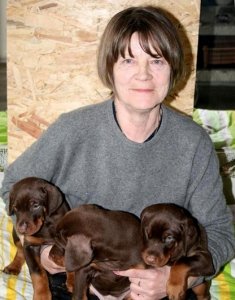
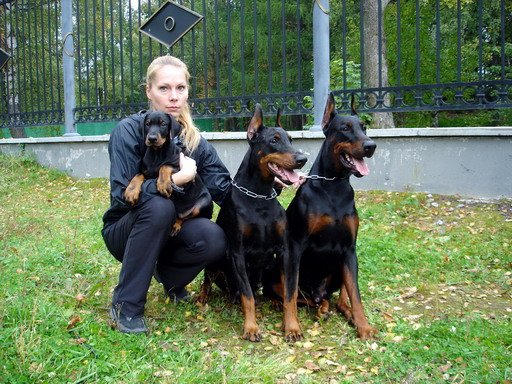
Natalia Fokht with little Teraline Montera, Teraline Aurora and Teraline Indigo


Michael Jakubowsky: Che cosa ha portato quest’anno per te ?


Natalia Fokht: Quest’anno era buono. I cani del mio allevamento hanno ottenuto i titoli importanti. Teraline Lord of the Ring (Teraline Aurora-Fedor del Nasi) è diventato campione di Doberman Club di Russia, ha passato la prova di ZTP ( V1A, il giudice: H. Wiblishauser). Teraline Indigo (Teraline Aurora-Atreyo de Grande Vinko) ha ottenuto il titolo del Campionato Internazionale. I cani della mia cucciolata “M ”(Teraline Aurora-Pako Daker) sono entrati in “alta società”.  Teraline Montera è diventata vincitrice di Dobermann Club in Russia, Giovane Campionessa di San Pietroburgo, la Miglior Giovane di Nazionale Campionato di Ukraina e vice giovane vincitrice di IDC. Teraline Midgard è diventato Miglior Giovane di Campionato Sociale e di Campionato di Mosca, il vice-Sieger di IDC in classe giovane e di Campionato del Mondo di FCI, il campione di Russia, Ukraina, Lettonia. Teraline Murano, che abita in Estremo Oriente, sulla frontiera con la Cina, ha fatto furore in questa regione come un giovane maschio. .
Loro hanno adesso 17 mesi e sono sicuro che ancora ci sorprenderanno con i loro successi in futuro.


TeralineMidgard_inter.jpg

Teraline Midgard


TeralineMontera_inter.jpg

Teraline Montera


TeralineLordoftheRing_inter.jpg

Teraline Lord of the Ring


I risultati impressionanti, in particolare per riguardo a fattore che non è un allevamento largo. La domanda seguente: come è possibile che di una cucciolata, in massimo due all’ anno, si può fare i cani con tutti i titoli sopraddetti ?


Hai notato bene che il mio allevamento è composto da una o due cucciolate all’anno, forse per questo motivo io sono più cauta ed attenta, così posso pensare a nuove combinazioni, ogni decisone sbagliata può essere molto dannosa – si può nemmeno perdere una generazione e l’anno del mio lavoro. E nella vita può capitare che si perde ulteriori prospettive. La mia famosa IDC Sieger – Trefovaja Dama iz Slavnoi Stai (Indira vd. Rauberhohle – Ugor di Villa Conte) – la fondatrice del mio allevamento, è stata in grado di avere una sola cucciolata nella sua vita – cucciolata “A” (da Gino Gomez del Citone), da cui sono nati i cani come multi campionessa, vice-vincitrice europea, vincitrice del Campionato Sociale di Russia, vincitrice del AIAD – Teraline Aurora e multi vincitore – Teraline Admiral. Teraline Aurora è diventata non solo un gran spettacolo e cane da lavoro, ma anche – eccezionale riproduttrice, che in combinazione con maschi diversi ha dato i cuccioli di livello elevato. Nella sua prima cucciolata da Ali Amadeus Piligrimas sono stati ottenuti: multi-campionesse Teraline Dark e Teraline Debiana Sid, vincitrice del Russo Club di Dobermann, campionessa internazionale, multi campionessa – Teraline Dancing Queen. In seconda figliata da Atreyo de Grande Vinko sono stati ottenuti: giovane vincitore europeo, internazionale e multi campione – Teraline Indigo, giovane vincitrice europea, vincitrice di AIAD e di IDC – Teraline Ingrid, multi vincitori Idaho, Impreza e in Italy. Nella terza cucciolata da Fedor del Nasi: multi campione e vincitore del Dobermann Club di Russia – Teraline Lord of the Ring. Nella quarta cucciolata d’Aurora da Pako Daker sono nati: vice-vincitore di IDC & Giovane campione del mondo Teraline Midgard e giovane vice vincitrice di IDC – Teraline Montera.


AIADWinners_2005.jpg

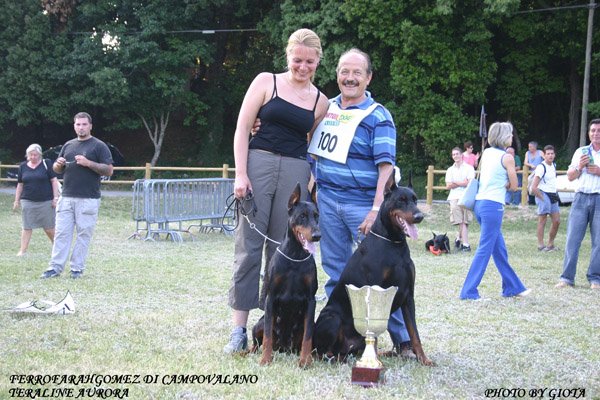
Teraline Aurora and Ferrofarah Gomez di Campovalano – AIAD Siegers


TeralineAurora_AIAD_Winner____2005_inter.jpg

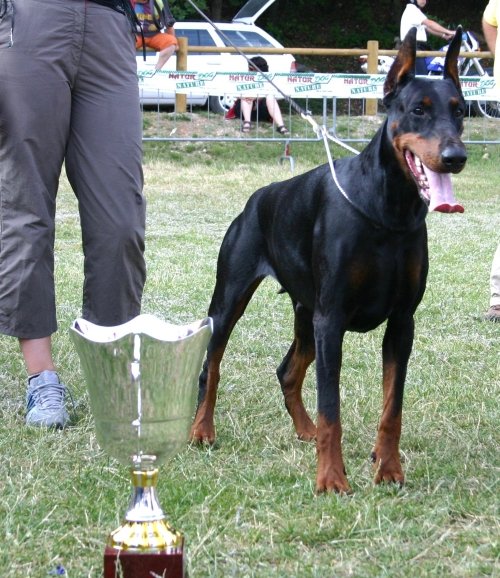
Teraline Aurora AIAD Siegerin


TeralineAuroraKorung2005_inter.jpg

Teraline Aurora – Korung 2005


TeralineAurora_Admiralat7years_inter.jpg

Aurora and Admiral


A suo parere, qual è la base di alto livello della stabilità dei risultati di Teraline Aurora, come riproduttrice ?


Prima di tutto, questo è basato sul suo fenotipo eccellente, il quale essa ha ricevuto da parte dei genitori: si tratta di una generale armonia ed equilibrio. Si dovrebbe accenare che lei possiede molto forte e lunga testa con un’eccelente espressione, il collo lungo e giusto, il petto molto profondo con un bordo lungo. Aurora è un cane molto forte, essa ha ottimi istinti e possiede forte carattere. Suo padre era il famoso Gino Gomez del Citone: progettato dal Dott. Pezzano. Gino Gomez del Citone può essere considerato uno dei migliori reproduttori del nostro tempo. Vale ricordare che lui ha dato alla nostra razza un sacco di dobermann al livello più alto. Io sono grata al dottor Pezzano che era in grado di usare Gino. La madre di Aurora- Trefovaja Dama iz Slavnoi Stai – era molto forte, ma nello stesso tempo – molto armoniosa e femminile. Questo cane non poteva lasciare indifferente nessuno. Tuttavia, il fenotipo non funzionerebbe nei discendenti, se non il sostegno del genotipo. Il genotipo di Gino Gomez ha concentrato tutti i migliori della Linea di Citone. Si potrebbe confermare che questo è il migliore che ha trasmesso Gino Gomez del Citone alla prole. Il genotipo di Trefovaja Dama, Taisia, Tamerlan, Tigr e di cucciolata “T” basava sulla combinazione di eccellenti riproduttori come Indira vd Rauberhohle con Ugor di Villa Conte. Indira incarna le migliori qualità di cani di linea Norden Stamm – come la grande forza e lo stile. Anche se è stata accoppiata con Ugor di Villa Conte per caso (lei non era destinata a lui in Italia), questo caso era molto felice. Ugor di Villa Conte, anche grazie suo padre Gamon di Campovalano, ha dato alla cucciolata “T” eccezionale forza, l’espressione perfetta di una forte e molto bella testa. Così collega le migliori qualità di queste due grandi linee e porta alla mostra. In seguito si ottiene il successo riproduttivo di cucciolata “T” e dei loro discendenti oggii.


IDCWinner2000_TrefovajaDama_inter.jpg

Trefovaja Dama iz Slavnoi Stai


IDC_SgTerfovajaDamawith_daughterTeralineAurora_inter.jpg

Trefovaja Dama with her daughter Aurora


Nel tuo allevamento si utilizza un unico cane molto famoso – vincitore – Gino Gomez del Citone,altri maschi non erano ben noti al pubblico. PerchĂŠ sono stati usati da te, perchĂŠ non hai scelto altri campioni che sono ben noti a tutti ?


Gino era magnifico cane con carattere. Grazie a questo lui poteva diventare un grande campione. Ma anche bisogna ricordare che lui ha avuto la corporatura proporzionata ed equilibrato pedigree. Tutte queste qualità gli hanno permesso di divenatare un grande riproduttore.
Non tutti i campioni mostrati possiedono le caratteristiche fenotipiche che sto cercando, così come i loro pedigree non sempre sono adeguati per le mie femmine. Capita spesso che nonostante i titoli, i campioni sono insostenibili come riproduttori.
Al contrario, a volte succede che un buon riproduttore non sia in grado di dare delle qualità positive alle femmine, se non si prende in considerazione le loro compatibilità fenotipiche (l’esistenza di debolezze comuni) e il pedigree. A molti proprietari di femmine piace "endogamia", non sapendo che la "magia" di accoppiamento tra consanguinei non funziona attraverso l’accoppiamento di cani mediocri che non possiedono le qualità preziose dei grandi antenati. Una buona soluzione non sempre si trova sulla parte superiore della superficie.
I maschi, che ho usato nel mio allevamento, erano dotati di queste qualità fenotipiche che andrebbero a completare la mia cagna, e il loro pedigree mi ha assicurato che avrei ottenuto un buon risultato. Il risultato complessivo – è un cane di tipo molto buono con un pedigree equilibrato. Queste qualità hanno portato successo sia durante le esposizioni che in attività dell’allevamento. Tutto questo conferma la correttezza della mia scelta. Io non vivo solo per giorno presente. Penso di futuro di Doberman "Teraline". Ho dedicato la stessa attenzione verso l’aspetto, il carattere e la salute dei Dobermann. Veramente cerco di avere cura di Dobermann che vivranno accanto a me.


TeralineDancingQueenmain_inter.jpg

Teraline Dancing Queen

TeralineDark_inter2.jpg

Teraline Dark


TeralineDebianasid_inter.jpg

Teraline Debiana Sid

TeralineIndigo_inter.jpg

Teraline Indigo


ingrid_inter.jpg

Teraline Ingrid

italy_inter.jpg

Teraline Italy


TeralineImpreza_inter.jpg

Teraline Impreza

isabell_inter.jpg

Teraline Isabelle


IDC_WinnerTeralineIngridwithowner_inter.jpg

IDC Siegerin 2008 Teraline Ingrid with owner Tommaso Vargiu and breeder Natalia Fokht


Molte persone dicevano che la cucciolata "T" di Slavnoi Stai era cruciale per lo sviluppo della razza in Russia. Dal momento quando tu possiedi Trefovaja Dama iz Slavnoi Stai, potrebbe dare qualche commento sui cani notevoli che provenivano dalla combinazione di Ugor di Villa Conte e Indira v.d. Rauberhohle ?


È chiaro che ci siano alcune linee forti e potenti che formano l’attuale "faccia" della razza. Non si dovrebbe inoltre dimenticare la base su cui la cucciolata ”T” è fatta. Non direi che la cucciolata ”T” è stata cruciale per lo sviluppo della razza in Russia, però il merito è grande – non c’è dubbio. E non solo in Russia, ma in tutto il mondo.
Tamerlan, Tigr, Taisija, Trefovaja Dama sono stati i cani mostrati e hanno fatto furore. Grazie al loro aspetto eccellente hanno vinto facilmente molti spettacoli. Sono stati i cani di più alto livello della razza, dello stesso tipo, ma, naturalmente, c’erano alcune differenze. Tamerlan è stato un grande e forte maschio, con la grande, maschile testa con le linee perfette. Tigr è stato un po’ inferiore di suo fratello, ma molto forte con un collo lunghissimo con la testa forte e il muso un po’ corto. Tuttavia secondo me l’aspetto più corretto tra i maschi di cucciolata ”T” aveva Titan Terenty: molto forte, compatto, con linea dorsale eccellente, potente e giusta testa con buona espressione. Purtroppo, è andato al proprietario che non era in grado di apprezzare un dono del destino. Così questo bellissimo Dobermann è rimasto sconosciuto al popolo e non ha lasciato nulla. Taisija era molto femminile, forte e profonda femmina con la testa eccellente. Trefovaja Dama era la cagna più armoniosa in questa cucciolata, teneva il suo fantastico equilibrio in piedi e in movimento. Tutti questi cani hanno avuto un meraviglioso, aperto carattere con un sacco di fiducia in se stessi. Grazie a Dio – i riproduttori sono diventati molto buoni. Sulla base di cucciolata „T” i cani hanno creato diversi allevamenti, collaborando con i diretti discendenti di questi cani notevoli. In allevamento lituano "Piligrimas" da Taisija e Ilane Darafal è nata Aisa Adelaila Piligrimas che era vincitrice di IDC. In allevamento lettone "Livonija" è stata istituita la linea di figlia di Taisija – Paola Penelopa Piligrimas, essa ha dato alla luce i cani davvero bellissimi. Trefovaja Dama ha stabilito il mio allevamento.
Tamerlan è stato usato da molti allevatori in Russia e all’estero, lasciando molti figli meravigliosi. Nello stesso modo e con grande succeso è stato usato Tigr.
Penso che cucciolata “T” abbia notevole influsso sui nostri allevamenti anche per questo motivo che oggidì i discendenti più popolari e di successo provengono da Tigr, Tamerlan, Taisija, Trefovaaja Dama. Ecco loro: Qualiam Quasim del Citone, Fedor del Nasi, Teraline Aurora e Indigo, Livonijas Baron Hitchcock, Heart of Hamlet e gli altri. Questi cani stessi – i rappresentanti di spicco della razza continuano a portare un linea di cucciolata "T".
.


TrefovajaDama&TigrizSSMay999_inter_1.jpg

Trefovaja Dama iz Slavnoi Stai and Tigr iz Slavnoi Stai


Ugor di Villa Conte
Gamon di Campovalano Graaf Quirinus v. Neerlands Stam
Hertog Alpha v. Le Dobry
Dea Dolores v. Franckenhorst
Mali di Campovalano Eltaipan di Campovalano
Zuma di Campovalano
Nancy di Villa Conte Rex del Rio Bianco
Quarz del Littorio
Hera v. Roveline
Athena di Villa Conte Orion di Campovalano
Hidargos Xoni

Indira v.d Rauberhohle

Prinz v. Norden Stamm Quinn dei Nobili Nati Runo dei Nobili Nati
Tairy di Campovalano
Kastra v. Norden Stamm
Ebo v. Groote Mat
Alida v. Flandrichen Lowen
Nemesis Figi v. Koepsel Graaf Quirinus v. Neerlands Stam Hertog Alpha v. Le Dobry
Dea Dolores v. Frankcenhorst
Kalina v. Norden Stamm Ebo v. Groote Mat
Alida v. Flandrichen Lowen


Sei abituata ad essere non solo un allevatrice molto famosa e giudice che viene da Russia, ma anche una buona tutrice. Mi ricordo che ti sei occupata di famosi cani come Bombastic v. Hanseaten, Nestor iz Zoosfery o Gemini Ginga House. Ciò che è importante per essere una buona tutrice dei Dobermann ?


Sì, mi sono occupata di Gemini Ginga House e grazie a me è vincitrice di Euro e BOB. Bombastic v. Hanseaten ha acquistato il titolo di vincitore IDC, Nestor iz Zoosfery è divenatato vice-vincitore di Euro. Ma tutti questi cani erano notevoli e sono stati ben preparati dai loro allevatori e proprietari, e io solo gli ho aiutato a vincere questo titolo importante. Dicendo la verità, non mi piace gestire i cani degli altri e lo faccio raramente.
Credo che per essere una buona gestrice si debba capire e sentire il cane, si dovrebbe essere in grado di vedere i loro punti forti e deboli. È importante anche trovare un secondo contatto con il cane, ovviamente se non stiamo parlando di propri cani. Preparare il dobermann alla mostra è un sacco di lavoro, ma anche si potrebbe dire che è arte. In ogni caso, sul ring, si vede soltanto il finale di tutto il lavoro che era fatto in precedenza con il cane.


Nestor.jpg

Nestor iz Zoosfery and Natalia Fokht – World Dog Show in Amsterdam 2002


Bombastic.jpg

Bombastic v. Hanseaten with Natalia Fokht – IDC 2002


Gemini_Ginga_House.jpg

Gemini Ginga House with Natalia Fokht – IDC 2003


Da quanto tempo callabori con Dobermann ?


Il mio primo Doberman appare nella mia famiglia nel 1988. Nel 1992 divento una giudice per Dobermann. Nel 2000 il mio allevamento è stato registrato nel FCI. Il suo nome deriva dal soprannome del suo fondatore – Trefovaja Dama. L’ho chiamata Tera, così abbiamo a che fare con "Teraline" – linea di Tera, la sua continuazione.
Sono stato invitata a giudicare a molte fiere, ci ho visto tanti cani della nostra razza che provenivano dai continenti diversi. Sono rimasta molto sorpresa da un dobermann di alta qualità di Indonesia.
Nel mio hobby – Dobermanns – è molto utile per me mio marito che si chiama Alexei. Lui è un bravo sportivo e un allenatore, non solo per le persone, ma anche per i cani. Prepara i nostri cani per ZTP e IPO, anche ad un addestramento fisico e agli spettacoli. Tutti e due pensiamo alle combinazioni future. Ad esempio, l’idea di combinazioni Aurora e Pako Daker Aurora e Salubi e della Ninfa Nobel appartiene ad Alexei. Naturalmente, Alexei – è il critico più severo sia se riguarda me, i nostri cani che i risultati del nostro lavoro comune. Come un’ allevatrice sono ancora all’inizio. Devo imparare moltissimo.


IMG_2236___8_inter.jpg

Alexei and Natalia on IDC 2009


IcarodiVillaCastelli_TrefovajaDama_Garmisch_18July1999.jpg

IDC 1999 in Garmish-Parterkirchen, Germany. Icaro di Villa Castelli

and Trefovaja Dama iz Slavnoi Stai.


Alexei_GM_Armani.jpg

Alexei – helper


Grazie per aver risposto alle mie domande. Buona fortuna in anno nuovo !

Interview with Natalia Fokht – russian


Interview with Natalia Fokht, russian breeder and judge, owner of "Teraline" kennel.


interview in english language

interview in italian language
 

1.jpg

Natalia Fokht with little Teraline Montera, Teraline Aurora and Teraline Indigo


Михаил Якубовскы: Что Вам принес этот год?


Наталия Фохт: Этот год был хороший. Собаки моего питомника получили несколько важных титулов. Тералайн Лорд оф зе Ринг (Тералайн Аврора-Fedor del Nasi) стал Чемпионом Национального Клуба, сдал ZTP (V 1А, Эксперт: H.Wiblishauser), Тералайн Индиго (Тералайн Аврора- Атрейо де Гранде Винко) получил титул Интернационального чемпиона, мой М-помет (Тералайн Аврора-Pako Daker) вышел в большой свет: Тералайн Монтера стала победителем Российского Доберман Клуба, Юным Чемпионом Санкт-Петербурга, Лучшим Юниором Украинского Чемпионата и вице-Юным Победителем IDC. Тералайн Мидгард стал Лучшим юниором Национального чемпионата Российского Доберман клуба и Чемпионата Москвы, вице-Юным Чемпионом IDC и Мира, чемпионом России, Украины, Латвии. Тералайн Мурано, живущий на Дальнем Востоке, на границе с Китаем, является самым успешным молодым кобелем в своем огромном регионе. Им сейчас по 17 месяцев и, я уверена, что они еще не раз дадут мне подвод порадоваться в будущем.
 

TeralineMidgard_inter.jpg

Teraline Midgard


TeralineMontera_inter.jpg

Teraline Montera


TeralineLordoftheRing_inter.jpg

Teraline Lord of the Ring


Впечатляющие результаты года, тем более для одного и небольшого питомника. И следующий вопрос: как Вам удается из одного, максимум двух пометов в год делать топ собак?


Вы правильно отметили, что у меня в питомнике бывает один-два помета в год, возможно это и заставляет меня бережно и кропотливо относиться к продумыванию комбинаций. Так как в случае моего неправильного решения я потеряю одно поколение и год своей работы, а в жизни случается так, что и дальнейшую перспективу. Моя знаменитая IDC победительница Трефовая Дама из Славной Стаи (Indira v.d. Rauberhohle-Ugor di Villa Conte) – основательница моего питомника, смогла иметь всего один помет в своей жизни – мой А-помет (Трефовая Дама из Славной Стаи-Gino Gomez del Citone), из которого вышли такие собаки, как мульти чампион, вице-чемпионка Европы, победительница Российского Доберман клуба, AIAD победительница Тералайн Аврора, мульти победитель Тералайн Адмирал и другие. Но даже этого одного помета оказалось не так уж мало, чтобы и дальше укреплять и развивать лучшие качества родоначальницы питомника. Тералайн Аврора стала не только великолепной выставочной и рабочей собакой, но и отличной производительницей, которая в комбинациях с различными кобелями давала щенков неизменно высочайшего уровня. В ее первом помете от Ali Amadeus Piligrimas были получены: Мульти Чемпионы Тералайн Дарк, Тералайн Дебиана Сид и победительница Российского Доберман клуба, Интернациональный. чемпинон – Тералайн Дансинг Квин. В помете от Атрейо де Гранде Винко: Юный Чемпион Европы, Интер. и мульти Чемпион Тералайн Индиго, Юный Чемпион Европы, AIAD победительница, IDC победительница Тералайн Ингрид, мульти победители Импреза, Изабель и Итали. В помете от Fedor del Nasi: мульти чемпион Тералайн Лорд оф зе Ринг. В помете от Pako Daker: Юные вице-победители ИДС Тералайн Монтера и Мидгард.
 

AIADWinners_2005.jpg

Teraline Aurora and Ferrofarah Gomez di Campovalano – AIAD Siegers
 

TeralineAurora_AIAD_Winner____2005_inter.jpg

Teraline Aurora AIAD Siegerin


TeralineAuroraKorung2005_inter.jpg

Teraline Aurora – Korung 2005


TeralineAurora_Admiralat7years_inter.jpg

Aurora and Admiral


По Вашему мнению, на чем основывается высокая стабильность результата Тералайн Авроры, как производительницы?


Прежде всего, на ее отличных фенотипических данных, которые она унаследовала от родителей. Это общая гармоничность и баланс. Очень крепкая и длинная голова с отличными плоскостями и выражением. Длинная, правильного выхода шея. Очень глубокая, с длинным ребром грудная клетка. Аврора очень крепкая собака, обладающая отличными инстинктами и очень твердым характером. Ее отцом был знаменитый Gino Gomez del Citone, задуманный и сделанный доктором Пеццано, настоящий производитель современности, давший породе очень много доберманов высочайшего уровня. Я благодарна доктору Пеццано, что у меня была возможность использовать его Gino.
Матерью Авроры была исключительно крепкая, но при этом – очень гармоничная и женственная Трефовая Дама из Славной Стаи. Эта собака никого не могла оставить равнодушной.
Но фенотип не будет работать в потомках, если его не поддерживает генотип. Генотип Gino Gomez del Citone сконцентрировал все лучшее из линии del Citone. И это лучшее Gino Gomez передавал своим потомкам. Генотип Трефовой Дамы, Таисии,
Тамерлана, Тигра и всего Т- помета базируется на соединении великолепной производительницы Indira v.d. Rauberhohle и Ugor di Villa Conte. Indira v.d. Rauberhohle воплотила в себе лучшие качества собак линии Norden Stamm – типичность, элегантность, классность и стиль. И хотя ее вязка с Ugor di Villa Conte состоялась по воле случая, этот случай оказался счастливым. Ugor, через своего отца Gamon di Campovalano, придал Т-помету отличный тип, исключительную общую крепость, отличное выражение сильной, очень породной головы. Соединение лучших качеств этих двух великих линий и привело к выставочному, а позже – племенному успеху Т-помета и его потомков сейчас.
 

IDCWinner2000_TrefovajaDama_inter.jpg

Trefovaja Dama iz Slavnoi Stai


IDC_SgTerfovajaDamawith_daughterTeralineAurora_inter.jpg

Trefovaja Dama with her daughter Aurora


В своем разведении вы использовали только одного топ победителя рингов – Gino Gomez del Citone, остальные кобели были не столь известны широкой публике. Почему именно они были использованы Вами, а не всем известные чемпионы?


Gino Gomez del Citone обладал исключительным экстерьером и характером, и именно это позволило ему стать великим чемпионом. Но также он обладал и отлично построенной, сбалансированной родословной, что позволило ему стать и великим производителем.
Не все чемпионы обладают нужными мне фенотипическими качествами, а так же их родословные не всегда подходят для моих сук. Достаточно часто случается, что чемпионы рингов в племенной деятельности оказываются совсем незначительными.
И наоборот, хороший производитель может не передать вашей суке нужных вам качеств, если вы не учитываете их фенотипическую сочетаемость (наличие общих недостатков) и, конечно, родословную. Многие владельцы сук любят использовать слово «инбридинг», недопонимая, что «волшебство» инбридинга не будет работать через вязку посредственных собак, не обладающих ценными качествами великих предков. Хорошее решение не всегда лежит на поверхности.
В использованных мной в разведении кобелях, я нашла те фенотипические качества, которые дополняли бы мою суку, а их родословная давала мне большую уверенность в хорошем результате. В итоге получались собаки очень хорошего типа со сбалансированной родословной и эти качества приносят им успех как на шоу, так и в племенной деятельности, что подтверждает правильность моего выбора. Я не живу только сегодняшним днем. Я думаю о том, каким будет доберман «Тералайн» в будущем. Равное внимание я уделяю как экстерьеру и характеру, так и здоровью добермана. Мне совсем небезразлично, какая собака будет жить со мной рядом.


TeralineDancingQueenmain_inter.jpg

Teraline Dancing Queen

TeralineDark_inter2.jpg

Teraline Dark


TeralineDebianasid_inter.jpg

Teraline Debiana Sid

TeralineIndigo_inter.jpg

Teraline Indigo


ingrid_inter.jpg

Teraline Ingrid

italy_inter.jpg

Teraline Italy


TeralineImpreza_inter.jpg

Teraline Impreza

isabell_inter.jpg

Teraline Isabelle


IDC_WinnerTeralineIngridwithowner_inter.jpg

IDC Siegerin 2008 Teraline Ingrid with owner Tommaso Vargiu and breeder Natalia Fokht


Многие люди говорили, что Т-помет оказал решающее значение на развитие породы в России. Поскольку Вы были владельцем Трефовой Дамы, могли бы Вы дать некоторые комментарии о замечательных собаках, произошедших от комбиниции Indira v.d. Ruberhohle и Ugor di Villa Conte?


В мире есть несколько сильных и влиятельных линий, которые формируют современное «лицо» породы. Также нужно не забывать, на основе чего сделана линия Т – помета. Я не сказала бы, что Т-помет внес решающий вклад в развитии породы в России, но то, что этот вклад большой – несомненно. И не только в России, но и во всем мире. Тамерлан, Тигр, Таисия, Трефовая Дама были очень успешны как выставочные собаки и обладали данными, благодаря которым они с легкостью побеждали на многих шоу. Все они были собаками высочайшего породного уровня, однотипными, но и имели некоторые различия. Тамерлан был очень крупным, крепким, с мужественной крупной головой кобелем. Тигр был чуть ниже брата, исключительно крепкий, с невероятно длинной шеей, с сильной головой и чуть коротковатой мордой. Самым благополучным, по моему мнению, кобелем из Т-помета был Титан Терентий: очень крепкий, компактный, с отличной линией верха, мощной и правильной головой с хорошим выражением. К сожалению, он достался владельцу, который не смог по достоинству оценить такой подарок судьбы и этот прекрасный кобель так и остался неизвестен широкой публике и не оставил после себя ничего. Таисия была очень женственной, крепкой и глубокой сукой с отличной головой. Трефовая Дама была самой гармоничной собакой в этом помете, она сохраняла свой фантастический баланс как в стойке, так и движении. Все перечисленные мной собаки имели замечательный, открытый характер и были исключительно уверены в себе. И благодаря Богу они стали еще и очень хорошими производителями. На основе собак Т- помета создано несколько питомников, работающих с прямыми потомками этих выдающихся собак. В литовском питомнике «Piligrimas» от Таисии a Ilane Darafal была получена IDC-Победительница Aisa Adelaila Piligrimas. В латвийском питомнике «Livonijas» основала свою линию дочь Таисии – Паола Пенелопа Пилигримас, родившая немало отличных собак. Трефовая Дама основала мой питомник. Тамерлан и Тигр активно использовались заводчиками как в России, так и за границей и оставили много замечательных потомков.
Я думаю, что Т-помет еще долго будет оказывать влияние на нашу породу. Потому что сегодня одни из самых успешных и востребованных производителей являются потомками Тигра, Тамерлана, Таисии и Трефовой Дамы: Qualiam Quasim del Citone, Fedor del Nasi, Тералайн Аврора и Индиго, Livonijas Baron Hich Cock и Heart of Hamlet и другие, которые и сами по себе являются выдающимися представителями породы и продолжают нести кровь Т-помета.
 

TrefovajaDama&TigrizSSMay999_inter_1.jpg

Trefovaja Dama iz Slavnoi Stai and Tigr iz Slavnoi Stai


Ugor di Villa Conte
Gamon di Campovalano Graaf Quirinus v. Neerlands Stam
Hertog Alpha v. Le Dobry
Dea Dolores v. Franckenhorst
Mali di Campovalano Eltaipan di Campovalano
Zuma di Campovalano
Nancy di Villa Conte Rex del Rio Bianco
Quarz del Littorio
Hera v. Roveline
Athena di Villa Conte Orion di Campovalano
Hidargos Xoni

Indira v.d Rauberhohle

Prinz v. Norden Stamm Quinn dei Nobili Nati Runo dei Nobili Nati
Tairy di Campovalano
Kastra v. Norden Stamm
Ebo v. Groote Mat
Alida v. Flandrichen Lowen
Nemesis Figi v. Koepsel Graaf Quirinus v. Neerlands Stam Hertog Alpha v. Le Dobry
Dea Dolores v. Frankcenhorst
Kalina v. Norden Stamm Ebo v. Groote Mat
Alida v. Flandrichen Lowen


Вы являетесь не только хорошо известным заводчиком и судьей из России, но также и очень хорошим хэндлером. Я помню, что Вы показывали много известных собак, например Gemini Ginga Haus, Bombastic v. Hanseaten, Нестор из Зоосферы. Что важно, чтобы быть хорошим хэндлером добермана?


Да, я выставляла Gemini Ginga Haus и со мной он стал чемпионом Европы и ВОВ, а также выиграл класс чемпионов на ИДЦ. Bombastic v. Hanseaten со мной стал победителем IDC, Нестор из Зоосферы выиграл рабочий класс и стал вице чемпионом Европы. Но все эти выдающиеся собаки были отлично подготовлены своими заводчиками и владельцами, и я только помогла им выиграть важные титулы. Честно говоря, я не очень люблю выставлять чужих собак и делаю это крайне редко.
Чтобы быть хорошим хэндлером, я думаю, надо понимать и чувствовать собаку, уметь видеть ее сильные и слабые стороны. А также надо суметь за секунды найти контакт с собакой, если мы говорим о показе собак чужих. Подготовить добермана к показу это огромная работа и в некотором роде – искусство. В двух словах невозможно рассказать: что важно, чтобы быть хорошим хэндлером. В любом случае в ринге мы видим только финал всей работы, проделанной ранее с собакой.
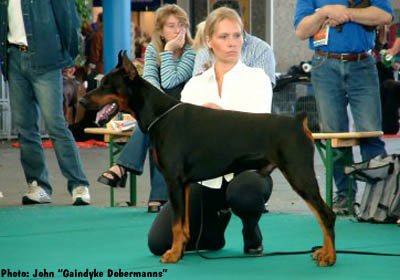
 

Nestor.jpg

Nestor iz Zoosfery and Natalia Fokht – World Dog Show in Amsterdam 2002
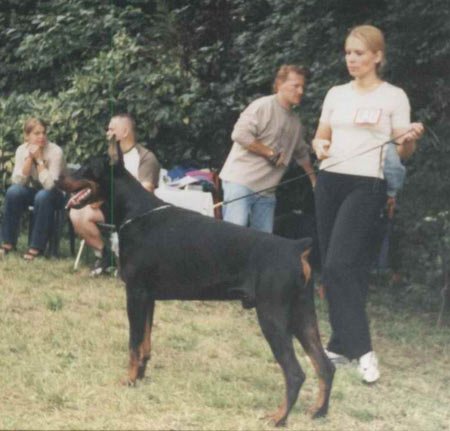
 

Bombastic.jpg

Bombastic v. Hanseaten with Natalia Fokht – IDC 2002
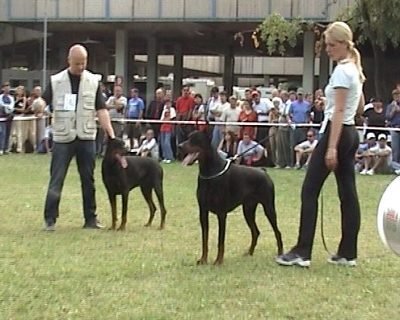
 

Gemini_Ginga_House.jpg

Gemini Ginga House with Natalia Fokht – IDC 2003


Как давно Вы с доберманом?


Мой первый доберман появился у меня в 1988 году. В 1992 году я стала судьей по породе доберман. В 2000 мой питомник был зарегистрирован в FCI. Его название происходит от домашнего имени его основательницы – Трефовой Дамы. Я звала ее ТЕРА, отсюда и название питомника – Тералайн – линия Теры.
Благодаря приглашениям судить на многих специализированных выставках, я видела состояние породы в разных странах и на разных континентах. Больше всего меня приятно удивили очень качественные доберманы Индонезии.
В моем увлечении доберманами мне очень помогает мой муж – Алексей, который является очень хорошим спортсменом и тренером не только людей, но и собак. Он готовит наших собак к ZTP и IPO, также занимается физическим тренингом и ринговой подготовкой с ними. Мы вместе продумываем будущие комбинации. Например, идея комбинаций Аврора – Pako Daker и Аврора – Salubi della Ninfa Nobel принадлежит Алексею. Естественно, Алексей – самый строгий критик как для меня и наших собак, так и для результатов нашей совместной работы.
Как заводчик, я нахожусь еще только в начале пути. Мне еще многому надо научиться и узнать о нашей породе.
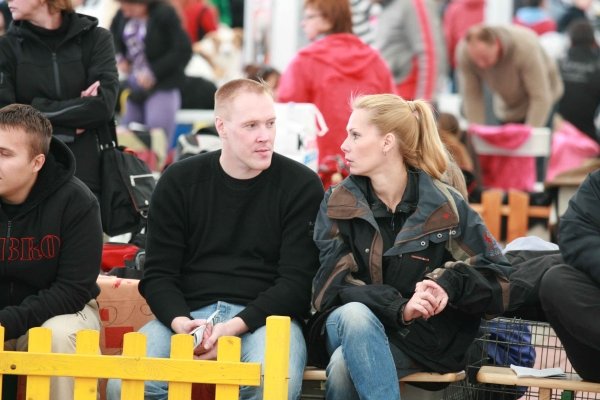
 

IMG_2236___8_inter.jpg

Alexei and Natalia on IDC 2009


IcarodiVillaCastelli_TrefovajaDama_Garmisch_18July1999.jpg

IDC 1999 in Garmish-Parterkirchen, Germany. Icaro di Villa Castelli

and Trefovaja Dama iz Slavnoi Stai.
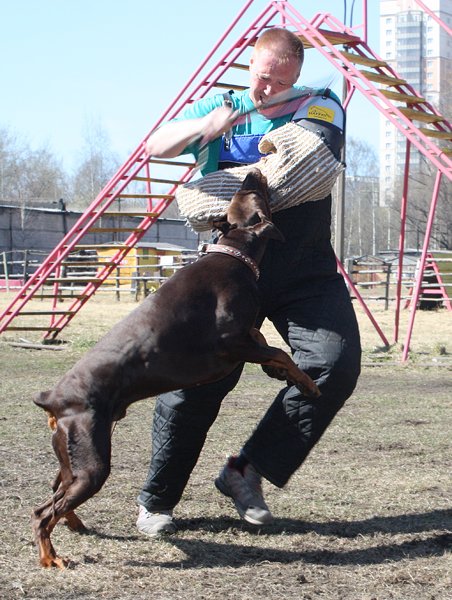
 

Alexei_GM_Armani.jpg

Alexei – helper


Михаил: «Спасибо, что ответили на мои вопросы. Удачи Вам в Новом году!»
Interview with Natalia Fokht


Interview with Natalia Fokht, russian breeder and judge, owner of "Teraline" kennel.


interview in russian language

interview in italian language


1.jpg

Natalia Fokht with little Teraline Montera, Teraline Aurora and Teraline Indigo


Michael Jakubowsky: What this year brough for you?


Natalia Fokht: This year was good. Dogs from my kennel got some important titles. Teraline Lord of the Ring (Teraline Aurora – Fedor del Nasi) became a Champion of National Russian Dobermann Club, passed ZTP (V1A, judge: H. Wiblishauser), Teraline Indigo (Teraline Aurora – Atreyo de Grande Vinko) got the title International Champion, dogs from my M litter (Teraline Aurora – Pako Daker) went into “high society” – Teraline Montera became winner of National Russian Dobermann Club, Junior Champion of Saint-Petersburg, Best Junior of Ukrainian National Championship and vice-IDC Junior Winner. Teraline Midgard became Best Junior at National Championships of Russian Dobermann Club and the Championship of Moscow, vice IDC Junior Winner and vice Junior World Winner, Champion of Russia, Ukraine, Latvia. Teraline Murano, who lives in the Far East, on the border with China, is the most successful young male in that vast region. They are now at the age of 17 months and I’m sure that they still will please us with their successes in the future.


TeralineMidgard_inter.jpg

Teraline Midgard


TeralineMontera_inter.jpg

Teraline Montera


TeralineLordoftheRing_inter.jpg

Teraline Lord of the Ring


Impressive results, all the more for one and not a big kennel. Next question:
How can you do that; from one, maximum two litters per year to breed top dogs?


You noticed correctly, that in my kennel is one or two litters a year, perhaps it makes me cautious and careful to think about new combinations, as in case of my wrong decision, I will loose a generation and a year of my work. And in life it may happen that is lost further prospects. My famous IDC Sieger – Trefovaja Dama iz Slavnoi Stai (Indira v.d .Rauberhohle – Ugor di Villa Conte), the founder of my kennel, was able to have only one litter in her life. My A-litter (from Gino Gomez del Citone) from which she produced such dogs as: multi Champion, vice-European Winner, Winner of National Russian Dobermann Club, AIAD Sieger – Teraline Aurora and Multi Winner – Teraline Admiral. Anyway, even one litter was not so little to further strenghten and to develop the best qualities of my kennel’s ancestor. Teraline Aurora became not only a great show and working dog but also an outstanding producer. In combinations with different males she gave puppies consistently of high level. In her first litter with Ali Amadeus Piligrimas were obtained: Multi Champions Teraline Dark and Teraline Debiana Sid, Winner of Russian Dobermann Club, International Champinon, Multi Champion – Teraline Dancing Queen. In second litter with Atreyo de Grande Vinko were obtained: Young European Winner, International and Multi Champion – Teraline Indigo, Young European Winner, AIAD Sieger, IDC Winner – Teraline Ingrid, Multi Winners Idaho, Impreza and Italy. In the third litter with Fedor del Nasi: multi champion and winner of Russian Dobermann Club – Teraline Lord of the Ring. In fourth Aurora’a litter with Pako Daker were born: IDC & World Young vice-winner – Teraline Midgard and IDC Young-vice winner – Teraline Montera.


AIADWinners_2005.jpg

Teraline Aurora and Ferrofarah Gomez di Campovalano – AIAD Siegers


TeralineAurora_AIAD_Winner____2005_inter.jpg

Teraline Aurora AIAD Siegerin


TeralineAuroraKorung2005_inter.jpg

Teraline Aurora – Korung 2005


TeralineAurora_Admiralat7years_inter.jpg

Aurora and Admiral


In your opinion, what is the base of the high stability of Teraline Aurora as a producer?


First of all, it’s based on her excellent phenotype, which she received from parents: this is a general harmony and balance; very strong and long head with excellent planes and expression; long, with correct exit neck; very deep, with a long edge, chest. Aurora is a very strong dog, which has excellent instincts and strong character. Her father was the famous Gino Gomez del Citone: designed and made by Dr. Pezzano. Gino Gomez del Citone –one of the best producer of our time, which gave to our breed a lot of highest lever Dobermans. I’m grateful to Dr. Pezzano that I was able to use Gino. Aurora’s mother was very strong, but at the same time – a very harmonious and feminine – Trefovaja Dama iz Slavnoi Stai. This dog could not leave anyone indifferent.
However, the phenotype will not work in the descendants, if it does not support by the genotype. Genotype of Gino Gomez concentrated all the best of del Citone’s line. And this is the best Gino Gomez del Citone passed on to their offspring. Genotype of Trefovaja Dama, Taisia, Tamerlan, Tigr and the T-litter’s dogs based on the combination of excellent producer Indira v.d. Rauberhohle with Ugor di Villa Conte. Indira embodied the best qualities of dogs Norden Stamm line’s – typical, total strength, elegant and style. Although she was mated with Ugor di Villa Conte by chance (in Italy she went not to him), – this case was a lucky one. Ugor di Villa Conte, through his father Gamon di Campovalano, gave to T-litter exceptional overall strength, the perfect expression of a strong, very beautiful head. Connecting the best qualities of these two great lines and led to the show and later – breeding success of T-litter and thier descendants now.


IDCWinner2000_TrefovajaDama_inter.jpg

Trefovaja Dama iz Slavnoi Stai


IDC_SgTerfovajaDamawith_daughterTeralineAurora_inter.jpg

Trefovaja Dama with her daughter Aurora


In your breeding you used only one top show – winner. It was Gino Gomez del Citone, the remaining males were not as well known to the public. Why they were used by you, instead of well-known champions?


Gino had a magnificent exterior and character and this enabled him to become a great champion.
He also had excellent built and balanced pedigree. It allowed him to become a great producer.
Not all show champions possess the phenotypic characteristics, which I’m looking for, as well as their pedigrees are not always appropriate for my females. Often happens that the champions rings are untenable as producers.
Conversely, a good producer sometimes can not give to your female right qualities. If you do not take into account their phenotypic compatibility (the existence of common weaknesses) and pedigree. Many female’s owners like to use the word "inbreeding", not knowing that "magic" of inbreeding will not work through the mating of mediocre dogs, do not possess valuable qualities of the great ancestors. A good solution is not always lie on the top of surface.
In males, which I used in my breeding, I found those phenotypic quality that would complement my bitch, and their pedigree gave me greater confidence in good result. The overall result – is a dog of very good type with a balanced pedigree and these qualities bring them success as on the show, and in breeding activity, which confirm the correctness of my choice. I do not live only for today. I think: what will be «Teraline» Doberman in the future. I devote equal attention to the exterior, character, and health of Dobermann. I really care about what Dobermann will live with me beside.
 

TeralineDancingQueenmain_inter.jpg

Teraline Dancing Queen

TeralineDark_inter2.jpg

Teraline Dark


TeralineDebianasid_inter.jpg

Teraline Debiana Sid

TeralineIndigo_inter.jpg

Teraline Indigo


ingrid_inter.jpg

Teraline Ingrid

italy_inter.jpg

Teraline Italy


TeralineImpreza_inter.jpg

Teraline Impreza

isabell_inter.jpg

Teraline Isabelle


IDC_WinnerTeralineIngridwithowner_inter.jpg

IDC Siegerin 2008 Teraline Ingrid with owner Tommaso Vargiu and breeder Natalia Fokht


Some people are used to say that "T" litter of «iz Slavnoi Stai» was crucial for development of the breed in Russia. Since you owned Trefovaja Dama iz Slavnoi Stai, could you give some comment about remarkable dogs which came from combination of Ugor di Villa Conte and Indira v.d Rauberhohle?


There are some strong and powerful lines, which form the current "face" of the breed. We should also not forget the basis, on which T litter is made. I would not say that T-litter has been instrumental in the development of the breed in Russia, but that contribution is large – no doubt. And not only in Russia, but throughout the world.
Tamerlan, Tigr, Taisija, Trefovaja Dama have been very successful show dogs and thanks to their excellent exterior – they easily won at the many shows. They were dogs of the highest level of the breed, the same type, but of course, had some differences. Tamerlan was a very big, strong male, with masculine, big head with good lines. Tigr was slightly lower, than his brother, extremely strong, with an incredibly long neck, with a strong head and a bit shortish muzzle. But in my opinion, the most correct exterior among T-litter’s males had Titan Terenty: very strong, compact, with excellent topline, powerful and correct head with good expression. Unfortunately, he went to the owner, who could not appreciate such a gift of fate and this beautiful Dobermann remained unknown to the people and left nothing behind. Taisija was very feminine, strong and deep female with excellent head. Trefovaja Dama was the most harmonious dog in this litter, she kept her fantastic balance in standing and in movement. All of these dogs had a wonderful, open character with lots of self-confidence. And thanks God – they became very good producers. On the basis of T-litter dogs created several kennels, working with direct descendants of these remarkable dogs. In Lithuanian kennel "Piligrimas" from Taisija and Ilane Darafal was born IDC Winner Aisa Adelaila Piligrimas. In Latvian kennel "Livonija", was established line Taisija’s daughter – Paola Penelopa Piligrimas and she has given a birth to really beautiful dogs. Trefovaja Dama established my kennel. Tamerlan was actively used by many breeders in Russia and abroad, leaving many wonderful offspring. The same actively, widely and successfully was used Tigr.
I think that T-litter for a long time will continue to affect on our breed. Because today the most successful and popular producers are descendants of Tigr, Tamerlan, Taisija, Trefovaja Dama: Quillam Quasim del Citone, Fedor del Nasi, Teraline Aurora and Indigo, Livonijas Baron Hitchcock and Heart of Hamlet and others. These dogs themselves – outstanding representatives of the breed and they continue to carry a line of T-litter on.


TrefovajaDama&TigrizSSMay999_inter_1.jpg

Trefovaja Dama iz Slavnoi Stai and Tigr iz Slavnoi Stai


Ugor di Villa Conte
Gamon di Campovalano Graaf Quirinus v. Neerlands Stam
Hertog Alpha v. Le Dobry
Dea Dolores v. Franckenhorst
Mali di Campovalano Eltaipan di Campovalano
Zuma di Campovalano
Nancy di Villa Conte Rex del Rio Bianco
Quarz del Littorio
Hera v. Roveline
Athena di Villa Conte Orion di Campovalano
Hidargos Xoni

Indira v.d Rauberhohle

Prinz v. Norden Stamm Quinn dei Nobili Nati Runo dei Nobili Nati
Tairy di Campovalano
Kastra v. Norden Stamm
Ebo v. Groote Mat
Alida v. Flandrichen Lowen
Nemesis Figi v. Koepsel Graaf Quirinus v. Neerlands Stam Hertog Alpha v. Le Dobry
Dea Dolores v. Frankcenhorst
Kalina v. Norden Stamm Ebo v. Groote Mat
Alida v. Flandrichen Lowen


You are not only a well-known breeder and judge fromRussia but also a very good handler. I remember that you have handled many famous dogs likes for example Bombastic v. Hanseaten, Nestor iz Zoosfery or Gemini Ginga House. What is important to be a good handler of dobermanns?


Yes, I’ve handled Gemini Ginga House and with me he became Euro Winner and BOB. With Bombastic v. Hanseaten I won IDC Sieger title, Nestor iz Zoosfery became vice World Winner. But all these outstanding dogs were well prepared by their breeders and owners and I only helped them to win these important titles. To tell the truth, I don’t like to handle other people’s dogs and do it very seldom.
To be a good handler, I think, you need to understand and feel the dog, to be able to see their strengths and weaknesses. And also be able to find in a seconds contact with the dog. If we are not talking about our own dogs. Preparation of Dobermann for show it’s a lot of work and some sort of art. In any case, in the ring, we see only the final of all the work previously done with the dog.


Nestor.jpg

Nestor iz Zoosfery and Natalia Fokht – World Dog Show in Amsterdam 2002


Bombastic.jpg

Bombastic v. Hanseaten with Natalia Fokht – IDC 2002


Gemini_Ginga_House.jpg

Gemini Ginga House with Natalia Fokht – IDC 2003


How long have you been with Dobermanns?


My first Doberman appeared in my family in 1988. In 1992 I became a judge for Dobermanns. In 2000 my kennel was registered in FCI. Its name comes from the nickname of its founder – Trefovaja Dama. I called her Tera, hence the name of the kennel – “Teraline” – line of Tera, her continuation.
With invitations to judge at many specialized shows, I saw the state of our breed on different continents. I was the most pleasantly surprised by a very high quality of Dobermans in Indonesia.
In my hobby – Dobermanns, – is very helpful to me my husband – Alexei, who is a very good athlete and coach not only for people but for dogs too. He prepares our dogs for ZTP and IPO, also engaged in physical training and preparation for shows. Together we think about future combinations. For example, the idea of combinations Aurora & Pako Daker and Aurora & Salubi della Ninfa Nobel belongs to Alexei. Of course, Alexei – the most severe critic as for me and our dogs and for the results of our joint work. As a breeder, I am still only at the beginning. I have a lot to learn about our breed
.


IMG_2236___8_inter.jpg

Alexei and Natalia on IDC 2009


IcarodiVillaCastelli_TrefovajaDama_Garmisch_18July1999.jpg

IDC 1999 in Garmish-Parterkirchen, Germany. Icaro di Villa Castelli

and Trefovaja Dama iz Slavnoi Stai.


Alexei_GM_Armani.jpg

Alexei – helper


Thank you for responding to my questions. Good luck to you in the New 2010 Year !

Interview with Anna Tits – italian


Interview mit Anna Tits, judge and breeder of russian dobermann kennel "iz Doma Domeni"


Sylwia Salmanowicz

"Elite House" kennel

October 2009

deutsche Sprache

english version

tits.jpg


Sylwia Salmanowicz: Quando e come è iniziata la tua avventura con i dobermann?

Anna Tits: Nel 1965 la nostra famiglia voleva comprare il cane. Mia madre ha scelto il dobermann che era della combinazione di due bellissimi genitori – Gobbi e Westa. Tutti e due erano vincitori moscoviti e provenivano di linea di sangue molto vecchio che era esportato da un militare tedesco. Grazie a Wego Grand sono rimasto affascinato di tutto che era legato ai cani, per esempio l’addestramento oppure le mostre dei cani. Purtroppo, a causa di malattia il nosto cane ci ha lasciato prestissimo. Anche il mio cane seguente era dobermann e proveniva di purosangue linea tedesca. Quando mi sono iscritto all’ corso cinologo ( 1970) la mia meraviglia diventava di giorno in giorno più grande. Quando la Russia è entrata in FCI ho registrato il mio allevemento "iz Doma Domeni".

S.S: Esiste qualche dobermann del passato che Ti è restato impresso nella memoria?

A.T: Ogni cane aveva un carattere molto speciale ed era per me molto particolare. In passato mi facevo questa domanda e non ero in grando trovare la risposta. Ogni cane aveva il posto speciale nel mio cuore .


S.S: Puoi dire qualcosa di Mirakel v.d Rauberhohle – cagna importata di Germania?

A.T: Per la prima volta ho visto sua madre Nemesis Figi v. Koepsel in grande mostra in Svizzera a Berna e sono rimasto entusiasta. Ho conosciuto la famiglia MĂśller e in seguenti anni volevo avere la cagna da Nemesis. Ho ottenuto il cucciolo che era ibrido di Nemesis con Alfa Adelante del Citone. La mia conoscente l’ha portato per me da Stoccarda a Mosca,era una bella cagna di eccelente carattere, quasi come un angelo – che era ideale non soltanto a vari doveri ma anche come un cane di compagnia. Spesso era presente durante le mostre, 6 volte era il campione, Rus Club Champiom, il vincitore di sua classe a IDC 2000 , HD – A , IPO I . Sono molto fiero di possedere questa cagna.


28012.jpg

Mirakel v.d Rauberhohle

S.S Aspettavi che da accoppiamemto Di Mirakel e Jivago v.h Wantij, due fratelli della stessa figliata si dimostreranno come una razza speciale non soltanto in Russia ma anche in Europa?

A.T: Io come ogni allevatore aspettvo qualcosa speciale dai suoi cuccioli. È ovvio. Purtroppo non esiste qualche istruzione per gli allevatori . Bisogna contare sull’istinto e sulla sua esperienza. Ho scelto Jivago di cui si diceva che grazie a esso i cuccioli avrebbero avuti ossa forte. Di una figliata ( 5 cani) 3 erano scelti per IDC 2003 che si preannunciava un gran successo. Non aspettavo che tutti e due i fratelli Pimmus e Punsh riportassero i successi, tanto più sono fiero di loro.

S.S: Pimms oppure Punsh – quale fratello è più speciale per te?

A.T: Non è una domanda giusta. Tutti e due cani sono per me molto importanti. Posso soltanto dire che Pimms è molto simile a Jivago, invece Punsh è quasi come Mirakel / Alfa Adelante. Sia Pimms sia Punsh sono particolari per me.


0023.jpg

Pimms Number One iz Doma Domeni


2853.jpg

Punsh iz Doma Domeni


S.S: È facile arbitrare Dobermann? A che cosa rivolgi la massima attenzione?

A.T: Tanti giudici pensano che la razza di Dobermann sia facile da giudicare. In mia opinione la difficoltà sia la stessa per tutte le razze. Non c’è la differenza. All’inizio rivolgo l’attenzione agli standard, per esempio mi domando se il cane sia quadrato. Mi interessa anche il suo garrese alto e torace ( deve essere non soltanto largo ma anche bello ). In più il cane per compiere certi compiti dovrebbe avere la bella groppa, bella e lunga testa. Il fattore più importante è l’impressione che fa.

S.S: Come puoi valutare la razza dobermann?

A.T: In passato la gente richiamava attenzione sulla bellezza di questa razza, oggidì il cane deve anche essere capace di lavorare ( allora presentare i tratti caratteristici per i cani da compiere il compito ) però dobbiamo ricordare che non può sparire la loro bellezza. Oggidì si sottolinea importanza della salute ( è un fattore importante che riguarda anche altre razze ). Soltanto la bellezza di un cane non basta. È molto importante anche la loro salute e la voglia di compiere i compiti. Così abbiamo un cane ideale. DV cerca di risolvere tutti i problemi che riguardano la data razza.

S.S: Qual è il tuo atteggiamento verso tutti i pericoli legati alla salute (DCM) oppure alla tendenza di allevare i dobermann che sono sempre più pesanti?

A.T: I problemi riguradanti la salute apparivano anche in passato, però allora i cani non erano esaminati oppure non era la possibilità di farlo a causa di mancanza di base medica. Oggigiorno ci sono tanti risultati d’analisi che sono pubblicati e abbiamo la possibilità di paragonarli. Prima non esistevano questi mezzi. È bene che la gente si interessi di questo. Non importa se siamo allevatori oppure proprietari di cane. Se eliminiamo i cani malati simulaneamente tutti i problemi si cancellano. Se riguarda allevamento di cani sempre più pesanti – non possiamo dimenticare di avere dobermann e no rottweiler. Non possiamo permettere a situazione che i cani oltrepassino limite superiore di peso. Bisogna mantenere l’armonia tra l’altezza e il peso.

S.S: Secondo Lei Dobermann dovrebbe avere le orecchie tagliate e la coda amputata ? Che Lei pensa di vietare mettere in mostra i tali cani in numero sempre più grande in altri paesi?

A.T: Sono molto conseguente, il vero dobermann è per me cane con le orecchie tagliate e la coda amputata. Questo va anche d’accordo con la filosofia di Luis Dobermann. Alcuni allevatori dei dobermann dopo il vietato hanno cambiando la razza. Dicendo la verità anch’io faresti così Però devo aggiungere che durante addestramento tutti i cani sono per me uguali, non importa se hanno coda o no.


S.S: IDC in Russi, secondo te è possibile nel futuro?

A.T: Sono del parere che sia possibile però ci sono tanti fattori che sono contro quest’idea. Il primo che per tanta gente è molto lontano, il secondo – ognuno avrà bisogno del visto. È difficile ottenerla e poi è cara, però sarei contento di poter sopravvivere un tale evento.


Interview with Anna Tits – eng


Interview mit Anna Tits, judge and breeder of russian dobermann kennel "iz Doma Domeni"


Sylwia Salmanowicz

"Elite House" kennel

October 2009

deutsche Sprache

italian version

tits.jpg


Sylwia Salmanowicz: When and how started your adventure with dobermanns?

Anna Tits: In 1965 our family decided to buy a dog. My mother chose a dobermann from the combination of very beautifull couple – Gobby and Westa who both were Moscow Winners. They came from old russian blood-lines which was exported from Germany by russian army.
With Wego Grand I went into raptures with everything what was associated with dogs – traning, shows etc. Unfortunately, Wego left early
because of his illness. My next dobermann came from pure german blood-line. My excitement and passion was bigger and I singed up
for cynological courses (1970). At the time when Russia entered to the FCI, I registrated my kennel "iz Doma Domeni" .

S.S: Is there any dobermann from the past who stuck in your mind?

A.T: Every dog had its own specific character and was very special for me. In the past I asked myself same question and I never could find an answer. Each one has special place in my heart.


S.S: Could you say something about your german import – Mirakel v.d Rauberhohle?

A.T: For the first time I saw her mother Nemesis Figi v. Koepsel on the big dog-show in Switzerland and she really impressed me.
I got to know Moller family and in the following years I wanted to have a daugther of Nemesis. I got puppie from the combination
of Alfa Adelante del Citone and Nemesis. My friend brought from Stuttgart to Moscow, beautifull female with excellent character, like
an angel, not only great for working but also as a family dog. She was shown often, 6x Champion, Russian, Club Champion, Class Winner
on IDC 2000, HD-A, IPO 1. I’m really proud of having this female.


28012.jpg

Mirakel v.d Rauberhohle

S.S Did you expect that from the combination of Mirakel and Jivago v/h Wantij two brothers from this litter will become so
important and influental males not only in Russia but also in Europe?

A.T: Every breeder expects something special from his litters and I’m not an exception. Unfortunately, there’s no instuction for breeders on
how to breed, we have to rely on our instinct and experience. I’ve chosen Jivago, who was used to give to his progeny strong bone-structure what I also achieved in that litter. From 5 pups, 3 were chosen into the finals on IDC 2003 what heralded a big success for me.

S.S: Pimms or Punsh? Which of them is more special to you?

A.T: I think it’s not a fair question. Both dogs are equaly important. I can only say that Pimms is more similar to Jivago while Punsh to Mirakel/Alfa Adelante. They are both special in their own way.


0023.jpg

Pimms Number One iz Doma Domeni


2853.jpg

Punsh iz Doma Domeni


S.S: Is it easy to judge dobermanns? What is the most important for you during judging?

A.T: Many judges think that the dobermann is an easy breed to judge but in fact is difficult as all other breeds. First of all I pay attention to standard, if the dog is quadratic, has high-shoulders, if chest is not only wide but also deep. As a working dog, dobermanns need to have excellent croup, beautifull, long head and great expression.

S.S: How do you assess development of the dobermann breed?

A.T: In the past a lot of people paid special attention to beauty (conformation). Nowadays, the dobermann has to be a working dog as well
so he is supposed to represent features which are specific for working breeds. Nevertheless, we must keep in balance beauty as well the working abilities. Also today, we put emphasis on health of the dobermann (in other breeds too). When dobermann is not only beautifull but also healthy and has working drives, we have an ideal dog. DV does many efforts to solve all problems of our breed.

S.S: What is your attitude towards danger of health problems (DCM) and also of tendency to breed more and more heavier dobermanns?

A.T: Health problems existed also in the past but the difference is that then dogs were not examined or there was not the possibility to
make an examination because lack of medical facilities. Today, many health results are published and we can compare them which was
not possible before. It’s a very positive aspect that we care about the health of our dobermanns and it doesn’t matter if we are breeders
or just dog-owners. If we will eliminate ill dogs from breeding we will sort this problem out. If it comes to breeding heavier dobermanns, we can’t forget that we have a dobermanns and not a rottweilers. We can’t let our dogs to be too heavy or to exceed the height limit. We should keep the harmony between weight and height.

S.S: Dobermann cropped or uncropped? What kind of view do you take of it taking into account that it’s forbidden to show cropped dobermann in many countries?

A.T: I’m very consequent about that matter. Real dobermann in my eyes is a cropped dobermann. It’s also the philosophy if Mr. Louis
Dobermann (founder of the dobermann breed*). Some breeders after the ban of cropping some breeders they gave or changed breeds. To be honest, I would do the same but I need to emphasize that during judging I pay attention to every dog and I don’t separate them on those who are cropped and those who aren’t.


S.S: IDC in Russia, do you think it’s possible in closest or distant future?

A.T: Of course, I think it is possible but there will be some negative factors towards this idea. At first the obligation of getting visa which is costly and not easy to get. In spite of everything, I would be very happy to see such a big event in Russia.


*translated into english by Michal Jakubowsky